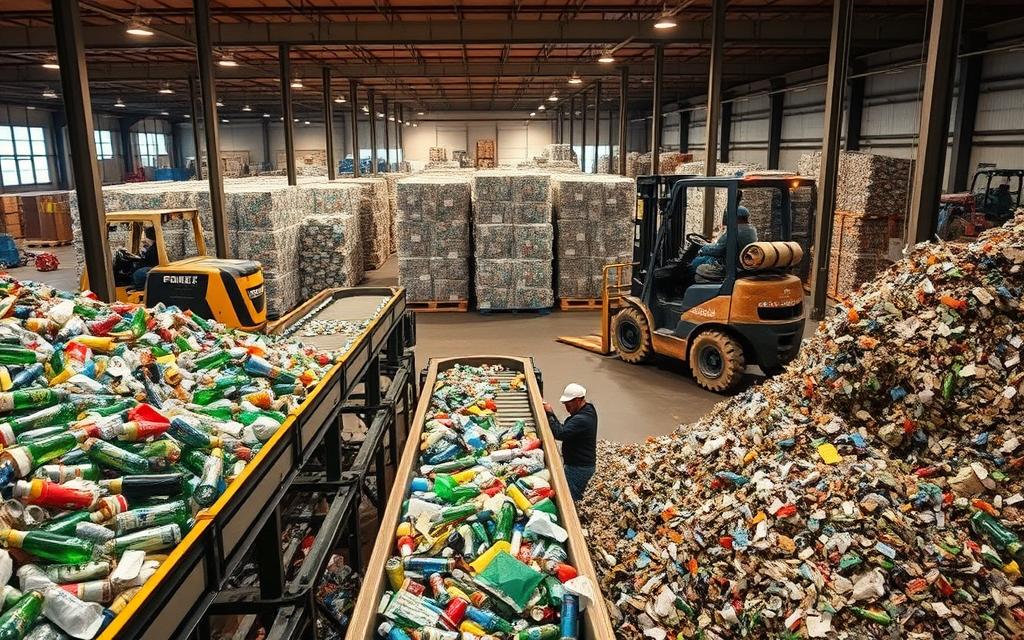
Modern recycling centers play a vital role in managing waste and conserving natural resources. These facilities are designed to process and transform discarded materials into valuable resources, reducing the need for landfills and minimizing environmental impact.
The journey of recyclables from curbside collection to becoming new products involves complex operations and sophisticated technology. By diverting waste from landfills, recycling centers contribute significantly to environmental conservation. As we explore the inner workings of these facilities, we will uncover the economic and environmental benefits they provide.
This overview sets the stage for understanding the crucial role that recycling centers play in modern waste management systems.
At the heart of the recycling process is the journey of materials from collection to processing. This journey is crucial for transforming waste into usable products.
Collection and Arrival
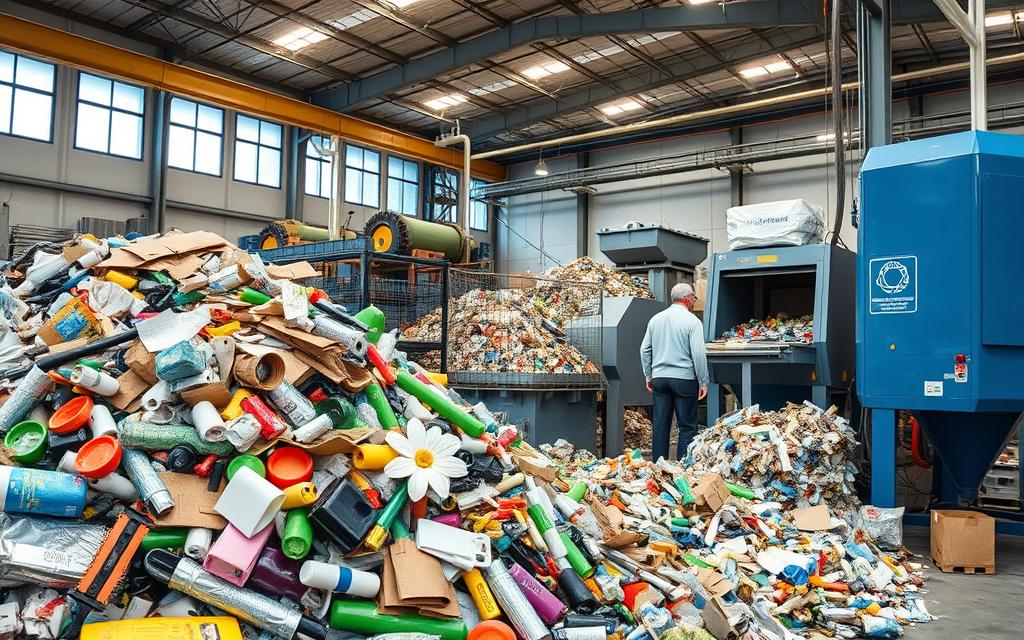
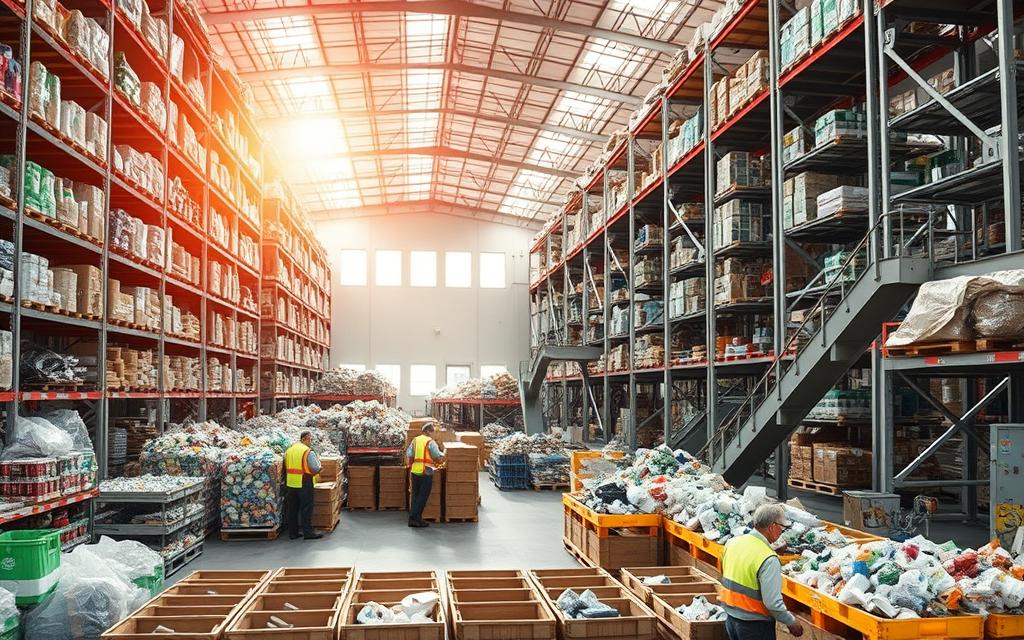
The journey begins with collection from residential and commercial sources. Materials are gathered into trucks that deliver them to the recycling center. Upon arrival, materials are unloaded onto tipping floors where the initial receiving process takes place.
Collection trucks bring materials to the recycling center.
Materials are unloaded onto tipping floors.
Initial Sorting Process
Once unloaded, materials undergo an initial sorting process. Obvious contaminants are removed, and materials are fed onto conveyor belts to begin their journey through the facility. The sorting process can vary depending on whether materials were collected through single-stream or source-separated methods.
The technology behind modern recycling centers is transforming the way we manage waste. Advanced systems enable efficient sorting and processing of recyclables.
Automated Sorting Systems
Automated sorting systems, including optical sorters and magnetic separators, play a crucial role in modern recycling. Optical sorters use infrared technology to identify different types of plastics and other items. Magnetic separators extract ferrous metals from the waste stream.
Material Recognition Technology
Material recognition technology, such as eddy current separators and air classifiers, further enhances the sorting process. Eddy current separators remove non-ferrous metals like aluminum, while air classifiers separate lighter materials (paper, plastic) from heavier ones.
Technology
Function
Optical Sorters
Identify different types of plastics and other items using infrared technology
Magnetic Separators
Extract ferrous metals from the waste stream
Eddy Current Separators
Remove non-ferrous metals like aluminum
Air Classifiers
Separate lighter materials (paper, plastic) from heavier ones
These technologies work together to efficiently process large volumes of recyclables, providing valuable information for improving recycling processes.
Manual Sorting Operations
Despite the rise of automation, human workers remain crucial in recycling centers. Manual sorting operations play a vital role in ensuring the quality of recyclable materials.
Quality Control Stations
At quality control stations, workers manually inspect and remove contaminants that machines might miss. This step is crucial for maintaining the integrity of the recyclable items being processed.
Contamination Removal
Workers identify and remove problematic waste that can damage equipment or contaminate material streams. Common contaminants include food residue, liquids, and non-recyclable plastics.
According to the Environmental Protection Agency (EPA), “effective recycling programs require a combination of technology and human oversight to ensure the quality of recyclables.”
“The human element in recycling is not just about sorting materials; it’s about ensuring that the materials we process are clean and can be turned into new products.” – Recycling Industry Expert
Manual sorting complements automated systems, ensuring high-quality recycled materials. By combining human oversight with technology, recycling centers can produce marketable recyclables.
Processing Different Materials at the Recycling Center
At the recycling center, various materials undergo distinct processing methods. The Wyandotte Recycling Center, for instance, accepts a range of materials including newspaper, office paper, glass bottles, plastic bottles, steel and aluminum cans, and various types of cardboard.
Paper and cardboard are processed separately due to different fiber qualities. Corrugated cardboard and box board are handled differently, with corrugated cardboard being compacted into large bales.
Plastic Processing
Plastic bottles (#1-#7) are sorted by type and processed accordingly. Different polymer types are identified and separated using advanced technology.
Glass and Metal Processing
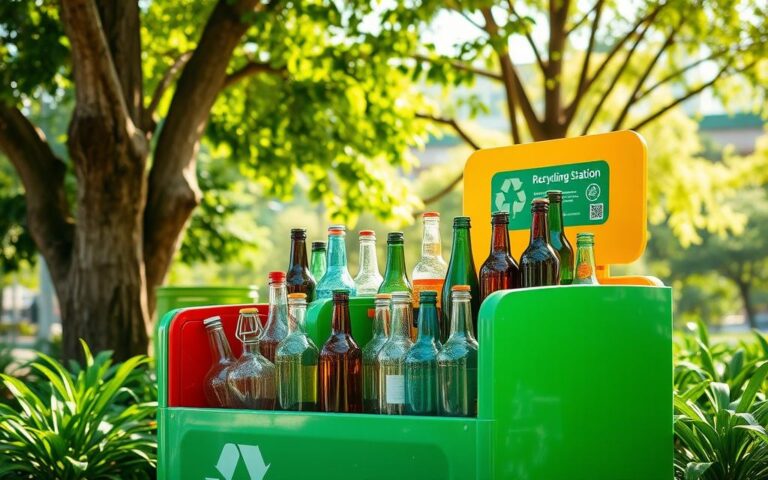
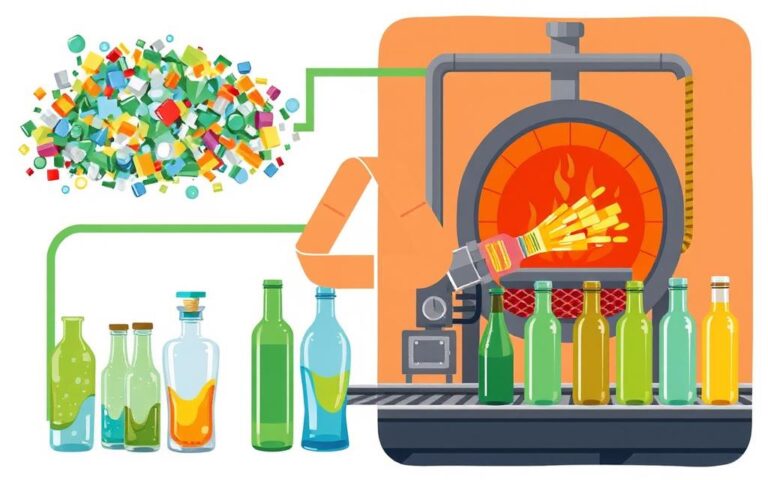
Clear glass bottles and jars are crushed and sorted by color. Steel and aluminum cans are processed separately, with magnets used to sort ferrous metals.
The recycling process for each material type requires specialized equipment and handling procedures. Contamination affects each material stream differently, emphasizing the need for proper sorting.
Baling and Preparation for Transport
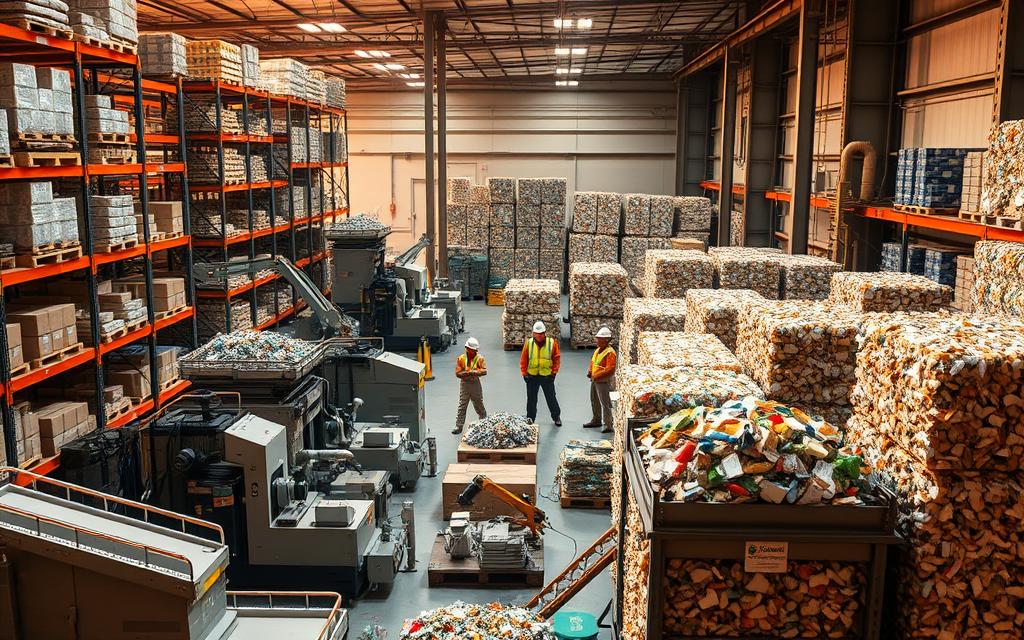
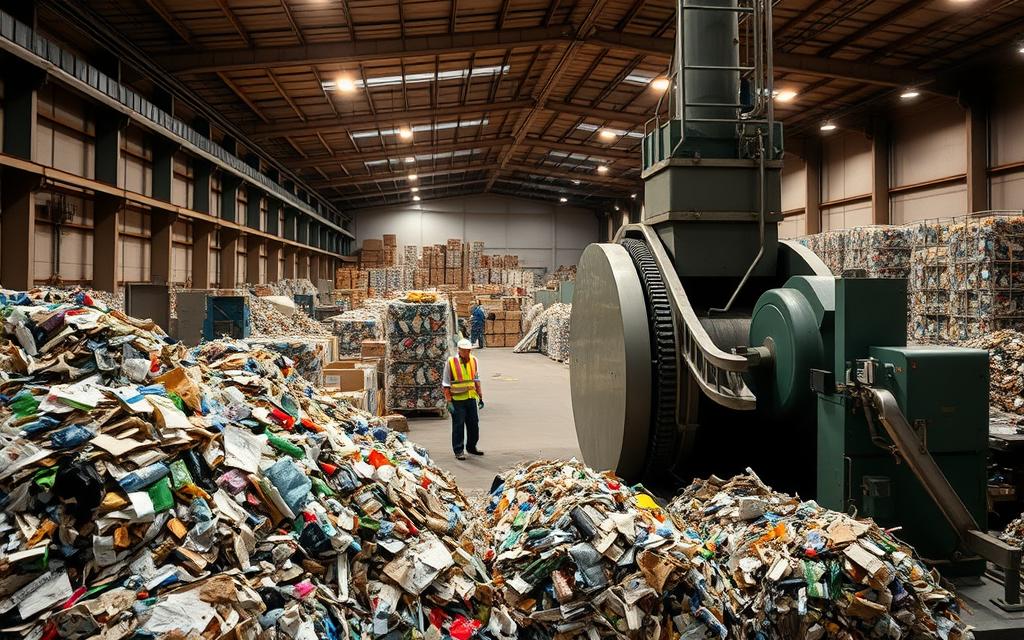
After processing, materials at the recycling center are baled for shipping. This crucial step involves compressing materials into dense, manageable units.
Compaction Methods
Different compaction methods are used for various material types. For instance, a hydraulic baler is often used for compacting cardboard and plastic.
Material Type
Compaction Method
Cardboard
Hydraulic Baler
Plastic
Hydraulic Baler
Glass
Crushing and Sorting
Storage and Shipping
Baled materials are stored at the recycling center before being shipped to manufacturers. The materials are then loaded onto trucks, trains, or ships for transport.
As noted by industry experts, “Proper baling and storage significantly affect the value and marketability of recycled materials.”
“The efficiency of the recycling process depends heavily on the quality of the baling operation.”
The logistics involved in moving processed recyclables to end markets require careful planning. Recycling centers track and document material shipments to ensure smooth delivery.
Environmental Impact of Recycling Centers
The environmental impact of recycling centers is multifaceted, contributing significantly to waste reduction and energy conservation. Recycling centers like the Wyandotte Recycling Center, which accepts yard waste including grass clippings and leaves, play a vital role in this process.
Waste Reduction Benefits
Recycling centers help divert waste from landfills, reducing methane emissions. By processing yard waste, they create valuable compost, decreasing the need for landfill space. This contributes to a significant reduction in environmental pollution.
Energy Conservation
Recycling conserves energy by reducing the need for producing new materials from raw resources. For instance, recycling metals and glass saves considerable energy compared to manufacturing from virgin materials. This energy savings contributes to a decrease in the overall carbon footprint.
Conclusion
The process of recycling is intricate, involving multiple steps from collection to processing. Understanding the operations of a recycling center highlights the importance of proper recycling practices. For the most efficient service, check the hours of your local recycling center, typically operating during standard business hours with adjusted hours for summer and winter.
To support recycling centers, consumers should properly sort and prepare items, including yard waste, for collection. For more information, visit your local recycling center’s website or contact them directly. By doing so, we can improve the efficiency of recycling and reduce waste.
FAQ
What are the operating hours of the facility?
The facility is open Monday through Saturday from 8am to 5pm, and Sunday from 9am to 4pm. It’s best to check our website or call ahead to confirm hours before visiting, as they are subject to change.
What types of materials are accepted?
We accept a variety of materials, including paper, cardboard, plastics, glass, and metals. We also have a special collection for yard waste and box materials. For a full list of accepted items, please visit our website or contact us directly.
How do I prepare my materials for collection?
To ensure efficient processing, please make sure to sort your materials according to our guidelines, remove contaminants, and flatten or crush items when possible. This helps us to process your materials more effectively.
Can I drop off my recyclables at any time?
Yes, you can drop off your recyclables during our operating hours. However, we recommend checking our website or calling ahead to confirm that we are accepting the types of materials you have.
What happens to the materials after they are collected?
After collection, materials are taken to our facility for sorting and processing. They are then prepared for transport to manufacturers, where they are turned into new products.
How can I find more information about the collection process?
For more information, you can visit our website, contact us directly, or check our information section for details on our collection process and guidelines for preparing your materials.
More than 2.2 billion people worldwide struggle with vision problems. This makes it crucial to have easy access to vision care and affordable glasses. Donating…
In today’s fast world, eyewear is key for many. It includes prescription glasses, sunglasses, and fashion frames. By 2027, eyewear production is set to hit…
We use cookies on our website to give you the most relevant experience by remembering your preferences and repeat visits. By clicking “Accept”, you consent to the use of ALL the cookies.
This website uses cookies to improve your experience while you navigate through the website. Out of these cookies, the cookies that are categorized as necessary are stored on your browser as they are essential for the working of basic functionalities of the website. We also use third-party cookies that help us analyze and understand how you use this website. These cookies will be stored in your browser only with your consent. You also have the option to opt-out of these cookies. But opting out of some of these cookies may have an effect on your browsing experience.
Necessary cookies are absolutely essential for the website to function properly. This category only includes cookies that ensures basic functionalities and security features of the website. These cookies do not store any personal information.
Any cookies that may not be particularly necessary for the website to function and is used specifically to collect user personal data via analytics, ads, other embedded contents are termed as non-necessary cookies. It is mandatory to procure user consent prior to running these cookies on your website.
We use cookies to ensure that we give you the best experience on our website. If you continue to use this site we will assume that you are happy with it.