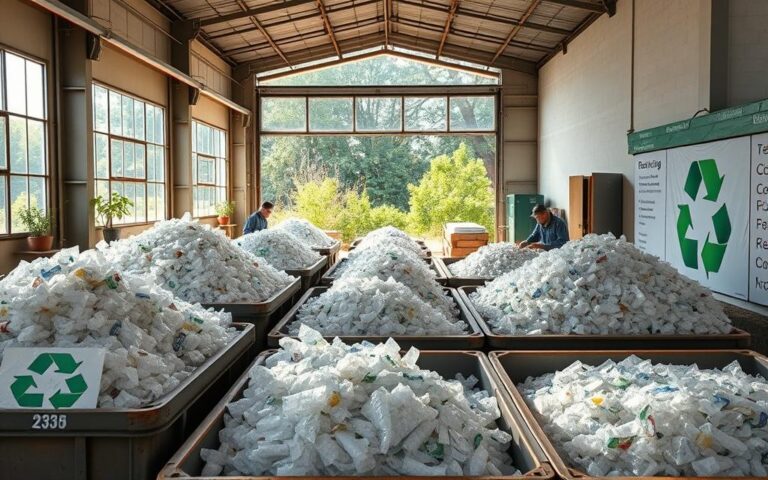
In today’s environmentally conscious world, responsible waste management is crucial. With over 350 materials and 100,000+ listings, North America has one of the most extensive recycling databases, managed by companies like Waste Management (WM), which processes almost 14 million tons of recyclable materials annually.
Finding a convenient recycling facility can significantly increase your likelihood of recycling regularly. Different facilities accept various types of materials, making it essential to know what can be recycled where. This guide will help you locate the most convenient recycling options in your area and prepare your items properly for sustainable waste disposal.
With the rise of digital platforms, identifying the nearest recycle center has become a straightforward task. Various online tools and resources are available to help you locate recycling centers in your area. This accessibility encourages more people to participate in recycling programs.
Online Directories and Search Tools
CalRecycle offers an interactive map tool that simplifies finding recycling centers. By entering the material you wish to recycle along with your zip code, you can quickly identify local recycling options.
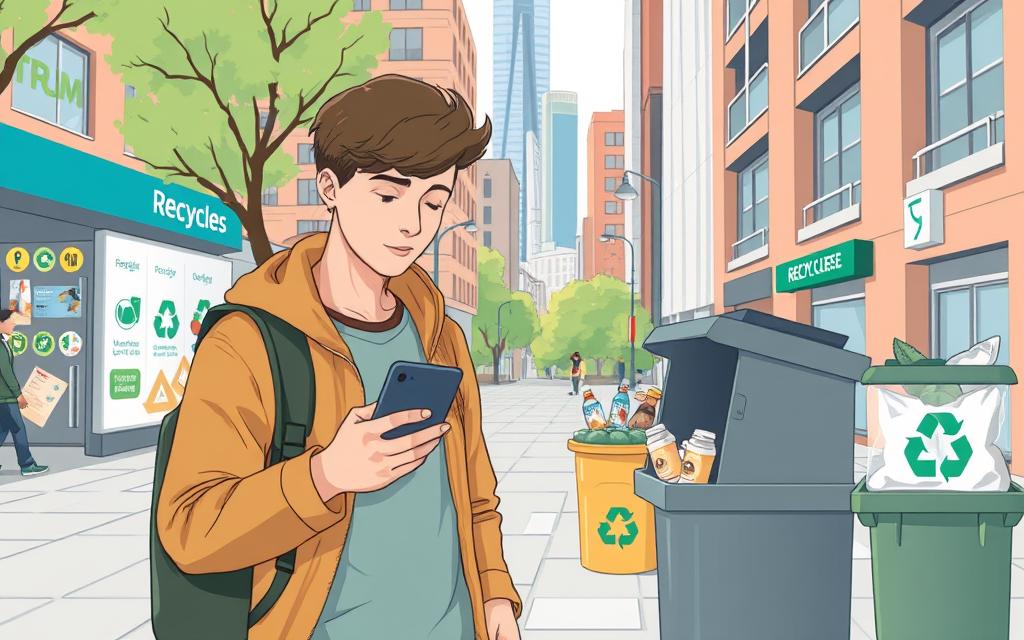
Mobile applications can significantly streamline the process of finding recycling centers. These apps can use your current location to identify the nearest facilities, provide turn-by-turn directions, and even offer reminder features to help establish regular recycling habits.
Mobile applications can use your current location to identify the nearest recycling facilities.
Many recycling apps allow filtering by material type to find specialized recycling centers.
Location-based services can provide turn-by-turn directions to your chosen recycling facility.
Some apps offer reminder features to help establish regular recycling habits.
Municipal waste management apps often include recycling center information alongside collection schedules.
These digital tools frequently update their information to reflect changes in operating hours or acceptance policies.
User reviews on these platforms can provide insights about wait times and overall facility quality.
Accepted Materials at Recycling Centers
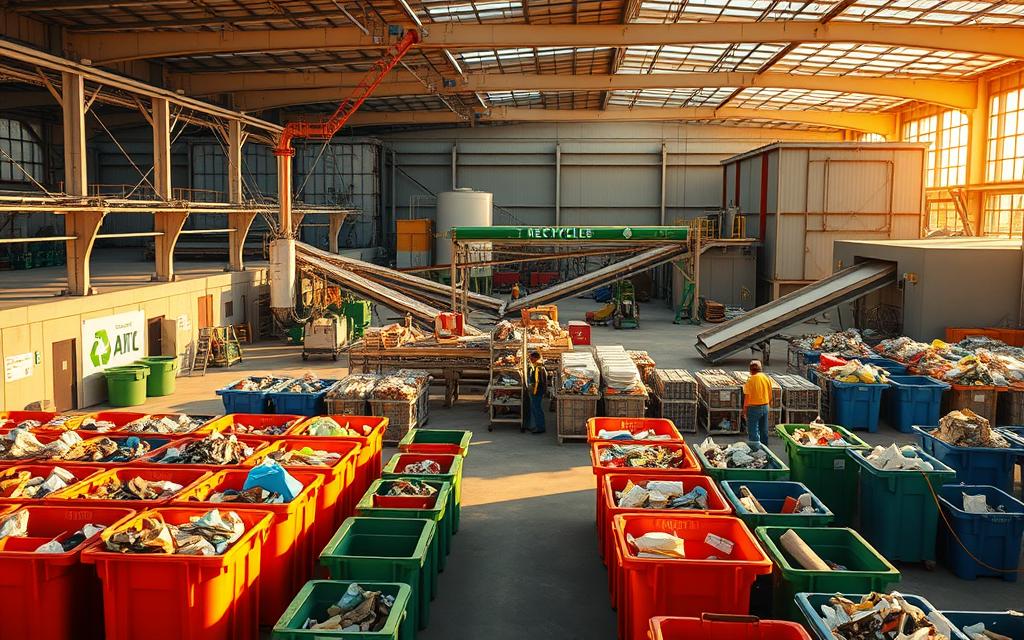
Understanding what materials are accepted at recycling centers is crucial for effective recycling practices. Recycling centers play a vital role in managing waste, with companies like WM handling almost 14 million tons of recyclable materials annually, including plastic, glass, and cardboard.
Common Recyclables
Common recyclables typically include glass, plastic, and paper products. These materials are widely accepted across various recycling centers. For instance, glass bottles and jars, certain types of plastic containers, and various paper products like cardboard and newspapers are commonly recyclable.
Special Materials and Restrictions
Some materials require special handling due to their hazardous nature or specific recycling requirements. This includes electronics, batteries, hazardous waste like paint and chemicals, and certain types of plastics and light bulbs. For example, electronics often contain hazardous components and need specialized recycling. You can find more information on local recycling options and guidelines by visiting resources like local recycling centers.
It’s also worth noting that some materials, such as Styrofoam packaging and plastic bags, have limited recycling options and may require specific collection methods. Understanding these nuances can significantly enhance your recycling efforts.
Preparing Items for Recycling Drop-Off
A little preparation goes a long way in making your recycling drop-off experience successful. To ensure that your recyclables are processed correctly, it’s crucial to follow the guidelines set by your local recycling center.
Cleaning and Sorting Requirements
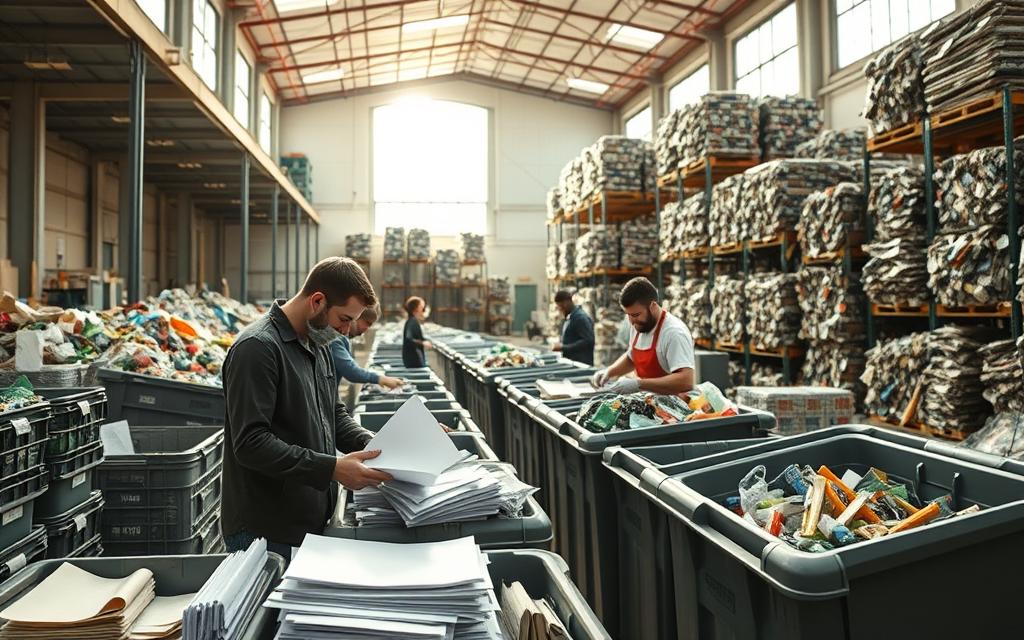
Recyclables should be clean and sorted according to the type of material. This makes it easier for the recycling center to process them. For instance, glass, plastic, and paper should be separated and free of contaminants.
Transportation Tips
When transporting your recyclables, use sturdy containers or bags to prevent them from scattering during transport. Organize materials by type before leaving home to make unloading more efficient. Additionally, consider the following tips:
Pack heavy items like glass in smaller, manageable containers to prevent injury.
Keep sharp items secure to prevent damage to your vehicle and reduce injury risk.
Some recycling centers offer drive-through service, while others require unloading at designated stations.
Plan your recycling trips to coincide with other errands to reduce transportation emissions.
Consider carpooling with neighbors for recycling trips to increase efficiency and build community connections.
Conclusion
With the help of digital platforms, identifying a nearby recycling center and preparing your recyclables has become a simple task. You can search online or use mobile apps to find a recycling location near you, such as those listed on local government websites.
Utilize online directories and apps to find convenient recycling centers.
Understand what materials are accepted to avoid contamination.
Properly prepare your recyclables for effective processing.
By adopting these habits, you contribute to environmental conservation and resource preservation. Staying informed about local recycling guidelines and sharing this information with others can amplify the positive impact.
FAQ
What types of glass are accepted at recycling facilities?
Most recycling facilities accept glass bottles and jars, but may not accept other types of glass, such as window glass or glass cookware. It’s best to check with your local recycling facility to confirm their glass acceptance policies.
How do I find a recycling location that accepts glass?
You can search online for “glass recycling near me” or use online directories like Earth911 to find a recycling location that accepts glass. You can also check with your local waste management agency for a list of accepted materials and locations.
What are the benefits of recycling glass?
Recycling glass helps conserve raw materials, reduces waste, and saves energy. Glass recycling also helps to reduce the amount of waste sent to landfills and conserves natural resources.
Can I recycle glass containers with lids or labels still attached?
It’s generally recommended to remove lids and labels from glass containers before recycling them. However, some recycling facilities may accept glass containers with lids or labels still attached, so it’s best to check with your local recycling facility for their specific guidelines.
Are there any special preparation requirements for recycling glass?
Some recycling facilities may require that glass containers be rinsed or sorted by color before being accepted. It’s best to check with your local recycling facility to confirm their preparation requirements.
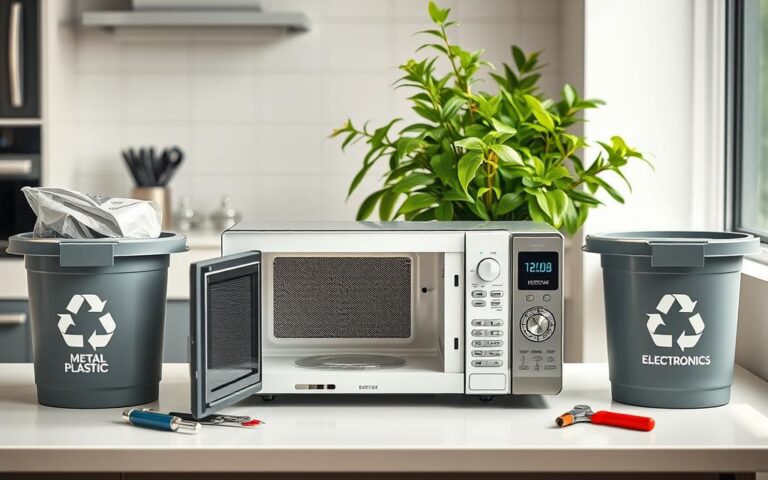
Modern life is creating more electronic waste, or e-waste, than ever before. The microwave oven, a common kitchen item, is part of this problem. These…
Recycling printer cartridges is a simple yet impactful way to reduce your environmental footprint. It’s estimated that 75% of empty cartridges are not being recycled….
Wood recycling is crucial in making our future more sustainable. It deals with wood waste from construction, manufacturing, and hospitality. These sectors generate a lot…
We use cookies on our website to give you the most relevant experience by remembering your preferences and repeat visits. By clicking “Accept”, you consent to the use of ALL the cookies.
This website uses cookies to improve your experience while you navigate through the website. Out of these cookies, the cookies that are categorized as necessary are stored on your browser as they are essential for the working of basic functionalities of the website. We also use third-party cookies that help us analyze and understand how you use this website. These cookies will be stored in your browser only with your consent. You also have the option to opt-out of these cookies. But opting out of some of these cookies may have an effect on your browsing experience.
Necessary cookies are absolutely essential for the website to function properly. This category only includes cookies that ensures basic functionalities and security features of the website. These cookies do not store any personal information.
Any cookies that may not be particularly necessary for the website to function and is used specifically to collect user personal data via analytics, ads, other embedded contents are termed as non-necessary cookies. It is mandatory to procure user consent prior to running these cookies on your website.
We use cookies to ensure that we give you the best experience on our website. If you continue to use this site we will assume that you are happy with it.