As businesses increasingly migrate their operations to cloud-based solutions, many find themselves with obsolete in-house servers that need proper disposal. While the transition to cloud storage offers numerous benefits, including scalability, cost-effectiveness, and reduced maintenance overhead, it creates a significant challenge:
How to safely and responsibly dispose of legacy server hardware.
The UK generates approximately 215 million tonnes of waste annually, according to Waste Direct. This includes all types of waste, from household to commercial and industrial. In 2020, England alone accounted for 162.8 million tonnes, which is 85% of the UK total.
That’s a considerable amount of volume that needs to be processed, making it important to follow the correct processes to reduce the impact of technical upgrades and obsolescence of technology.
Understanding the Risks of Improper Server Disposal
Before reviewing disposal methods, we need to look at the causes and cases for disposal.
In-house servers typically contain sensitive business data, customer information, financial records, and proprietary systems that could be catastrophic if they fall into the wrong hands. Additionally, servers contain valuable materials like precious metals, rare earth elements, and hazardous substances that require specialized handling to prevent environmental contamination.
Data breaches resulting from improper disposal can lead to severe financial penalties, legal liability, reputation damage, and loss of customer trust. Meanwhile, environmental violations can result in regulatory fines and contribute to ecological damage. The stakes are high, making proper disposal not just a best practice, but a business necessity.
Step 1: Data Security and Complete Sanitisation
The first and most critical step in server disposal is ensuring complete data destruction. Simply deleting files or formatting drives is insufficient, as sophisticated recovery tools can retrieve seemingly erased information. Professional-grade data sanitisation must be performed on all storage devices.
Start by creating a comprehensive inventory of all servers and their components, noting serial numbers, hard drive specifications, and any removable storage media. Document the types of data previously stored on each system to ensure appropriate sanitisation levels. For highly sensitive information, consider the most stringent data destruction standards such as DoD 5220.22-M or NIST 800-88 guidelines.
Physical destruction of hard drives may be necessary for the most sensitive data. This involves using specialised equipment to shred drives into small pieces, making data recovery impossible. Many certified e-waste recyclers offer witnessed destruction services where you can observe the physical destruction process and receive certificates of destruction for compliance documentation.
For solid-state drives (SSDs), the sanitisation process differs from traditional hard disk drives. SSDs require specialized wiping techniques due to their wear-levelling algorithms and over-provisioning features. Professional data destruction services have the expertise and tools necessary to properly sanitise various storage technologies.
Step 2: Regulatory Compliance and Documentation
Various regulations govern electronic waste disposal, and compliance requirements vary by industry and location. Healthcare organisations must comply with HIPAA requirements, financial institutions face SOX and PCI DSS obligations, and many businesses must adhere to state and federal environmental regulations.
Research the specific compliance requirements applicable to your business and ensure your disposal process meets these standards. This typically includes maintaining detailed documentation of the disposal process, obtaining certificates of destruction for all data-bearing devices, and using certified disposal vendors who can provide proper documentation.
Create a disposal policy that outlines your organisation’s procedures for equipment retirement, including approval processes, security requirements, and documentation standards. This policy should be regularly updated and communicated to all relevant staff members to ensure consistent application across your organisation.
Step 3: Choosing Certified E-Waste Recyclers
Not all electronic recycling companies are created equal. When selecting a disposal vendor, prioritise those with proper certifications such as R2 (Responsible Recycling) or e-Stewards certification. These certifications ensure the recycler follows strict environmental and data security standards throughout the disposal process.
Verify that your chosen recycler provides comprehensive services including secure transportation, certified data destruction, and environmentally responsible recycling. Request detailed information about their processes, security measures, and downstream partners to ensure your equipment won’t end up in overseas dumping grounds or unsecured facilities.
Ask potential vendors about their chain of custody procedures, insurance coverage, and compliance tracking systems. A reputable recycler should provide detailed reporting on how your equipment was processed, including weights of materials recovered, destruction certificates, and environmental impact metrics.
Step 4: Asset Recovery and Value Optimisation
Before disposal, evaluate whether any server components retain value that could offset disposal costs or provide tax benefits. Working with certified recyclers who offer asset recovery services can help maximise the return on your hardware investment while ensuring secure disposal.
Some components may qualify for manufacturer take-back programs, which can provide credits toward new equipment purchases. Others might be suitable for remarketing to secondary users after proper data sanitisation. However, ensure that any resale or donation activities maintain the same security standards as complete disposal.
Document the fair market value of disposed equipment for potential tax deductions. Many businesses can claim charitable deductions for donated equipment or write off the remaining book value of disposed assets. Consult with your tax advisor to understand the specific benefits available to your organisation.
Step 5: Environmental Considerations
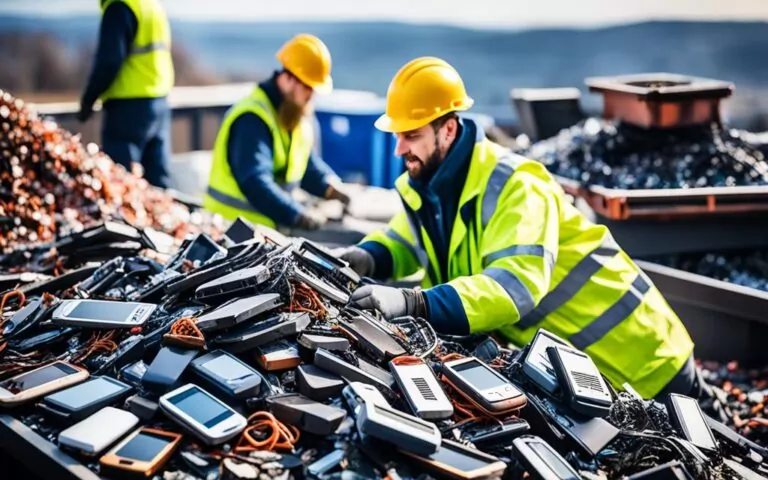
Responsible server disposal extends beyond data security to environmental stewardship. Servers contain valuable materials including gold, silver, copper, and rare earth elements that can be recovered and reused, reducing the need for new mining operations.
They also contain hazardous materials like lead, mercury, and various chemical compounds that require proper handling.
Choose recyclers who demonstrate genuine commitment to environmental responsibility through their processes and partnerships. Look for facilities that maximise material recovery, minimise waste sent to landfills, and operate with transparent environmental reporting.
Consider the carbon footprint of your disposal process, including transportation methods and distances. Some recyclers offer carbon-neutral disposal options or can help offset the environmental impact of the disposal process through verified environmental programs.
Step 6: Transportation and Chain of Custody
Secure transportation is a critical component of safe server disposal. Work with recyclers who provide secure vehicles, GPS tracking, and detailed chain of custody documentation from pickup to final destruction. Insist on sealed containers and tamper-evident packaging for sensitive equipment.
For high-security disposals, consider requiring background-checked drivers, escort services, or even direct transportation to witnessed destruction facilities. The transportation phase represents a significant vulnerability in the disposal process, so don’t overlook this crucial element.
Maintain detailed records of all equipment leaving your facility, including serial numbers, pickup dates, transport companies, and destination facilities. This documentation provides essential audit trails and helps ensure accountability throughout the disposal process.
Post-Disposal Best Practices
After completing the disposal process, organise all documentation including certificates of destruction, recycling reports, and compliance attestations. These documents may be required for audits, regulatory reporting, or legal proceedings for years after the disposal event.
Conduct a post-disposal review to identify lessons learned and potential improvements for future disposal projects. This review should evaluate the effectiveness of your chosen vendors, the adequacy of your security measures, and the efficiency of your overall process.
Update your asset management systems to reflect the disposal of retired equipment and ensure that all related software licenses, maintenance contracts, and insurance policies are properly cancelled or transferred.
Clean Up And Move To The Cloud
Safely disposing of in-house servers after migrating to cloud storage requires careful planning, attention to security, and commitment to environmental responsibility. By following a systematic approach that prioritises data destruction, regulatory compliance, and environmental stewardship, businesses can successfully navigate this critical transition while protecting their interests and supporting sustainable practices.
The investment in proper server disposal pays dividends through reduced liability exposure, regulatory compliance, potential asset recovery, and positive environmental impact.
As cloud adoption continues to accelerate, developing robust e-waste management capabilities becomes an increasingly important business competency that demonstrates both operational excellence and corporate responsibility.
The UK government plays a crucial role in promoting laptop recycling as part of its efforts to enhance environmental sustainability. According to the Health and…
In today’s digital age, laptops have become an essential part of our lives. However, the fast-paced technology industry has led to a significant increase in…
In today’s rapidly advancing technological era, rare metals play a pivotal role in the production of phones and tablets. These devices have become an integral…
Laptop decommissioning is a crucial process that involves securely erasing data from old laptops and properly disposing of them in an eco-friendly manner. Failing to…
Data erasure is the process of permanently destroying data from storage devices, such as hard drives and solid-state drives (SSDs). It ensures that the data…
We use cookies on our website to give you the most relevant experience by remembering your preferences and repeat visits. By clicking “Accept”, you consent to the use of ALL the cookies.
This website uses cookies to improve your experience while you navigate through the website. Out of these cookies, the cookies that are categorized as necessary are stored on your browser as they are essential for the working of basic functionalities of the website. We also use third-party cookies that help us analyze and understand how you use this website. These cookies will be stored in your browser only with your consent. You also have the option to opt-out of these cookies. But opting out of some of these cookies may have an effect on your browsing experience.
Necessary cookies are absolutely essential for the website to function properly. This category only includes cookies that ensures basic functionalities and security features of the website. These cookies do not store any personal information.
Any cookies that may not be particularly necessary for the website to function and is used specifically to collect user personal data via analytics, ads, other embedded contents are termed as non-necessary cookies. It is mandatory to procure user consent prior to running these cookies on your website.
We use cookies to ensure that we give you the best experience on our website. If you continue to use this site we will assume that you are happy with it.