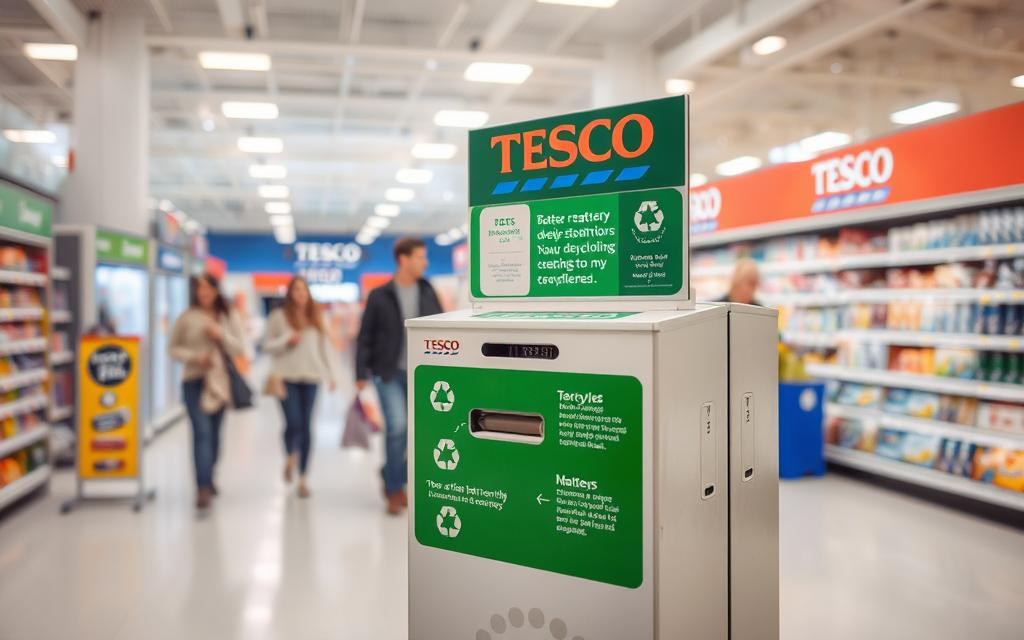
Responsible disposal of batteries is a crucial environmental priority in the UK. Tesco is leading the charge by offering customers an essential service for sustainable waste management. Batteries should never end up in standard household rubbish due to significant environmental risks.
The UK generates a substantial amount of electronic waste annually, with batteries being a significant contributor. Tesco’s comprehensive recycling program across its UK stores provides customers with convenient collection points for responsible disposal. By participating in this initiative, customers can help reduce the environmental impact of improper disposal.
This article will provide detailed information about Tesco’s initiative, including the types of materials accepted, store locations, and the benefits of proper disposal. By understanding how and where to recycle at Tesco stores, customers can contribute to a more sustainable future.
Proper disposal of batteries through recycling is vital for reducing environmental hazards. Batteries contain toxic materials that can contaminate soil and water if not disposed of correctly.
Environmental Hazards of Improper Battery Disposal
Improper disposal of batteries can lead to significant environmental hazards. Batteries contain heavy metals like lead, mercury, and cadmium, which are harmful to the environment and human health. When batteries are sent to landfills, these toxic materials can leach into the soil and groundwater, causing contamination.
Legal Requirements for Battery Recycling in the UK
The UK has implemented strict regulations for battery recycling through the Waste Batteries and Accumulators Regulations. Retailers selling more than 32kg of batteries annually are required to provide free collection points for waste batteries. This regulation applies to all retailers, including physical stores and online platforms. The Office for Product Safety and Standards oversees the battery takeback scheme, ensuring compliance and enforcing penalties for non-compliance.
As stated by the UK government, “Retailers must accept all types of portable batteries regardless of whether the customer purchases a new battery, making it easier for consumers to dispose of batteries responsibly.” This emphasizes the importance of sustainable practices in waste management.
Tesco has taken a significant step towards environmental sustainability with its comprehensive battery recycling program. This initiative is part of Tesco’s broader commitment to reducing waste and promoting eco-friendly practices among its customers.
Overview of Tesco’s Sustainability Initiatives
Tesco’s sustainability initiatives are designed to minimize the environmental impact of its operations. The company’s battery recycling program is a key component of these efforts, providing customers with a convenient way to dispose of used batteries responsibly. With approximately 825 stores participating in the program, Tesco is making a significant contribution to the UK’s battery recycling efforts.
Key features of Tesco’s sustainability initiatives include:
Comprehensive recycling programs for various household items
Commitment to reducing waste and carbon emissions
Education and awareness campaigns to promote eco-friendly practices
How Tesco’s Battery Recycling Service Works
Tesco’s battery recycling service is designed to be user-friendly and accessible to all customers. The service operates through collection points located in participating stores, where customers can deposit their used batteries for recycling.
The process is straightforward: customers simply drop off their used batteries in the designated collection containers, which are regularly collected and taken to specialized recycling facilities. This service is free, making it easy for customers to participate in responsible battery disposal.
The benefits of Tesco’s battery recycling service include:
Convenient locations in over 825 stores across the UK
Easy drop-off process without any purchase requirement or paperwork
Regular collection and transportation to recycling facilities
Types of Batteries Accepted at Tesco
Tesco stores now accept various types of batteries for recycling, making it easier for customers to dispose of them properly. This initiative is part of Tesco’s broader effort to reduce electronic waste and promote sustainability.
Household Batteries
Tesco accepts household batteries, including AA, AAA, and 9V batteries, for recycling. These batteries are commonly used in household items and toys. By recycling them, customers can help reduce the amount of waste sent to landfills. For more information on Tesco’s recycling programs, you can visit their recycling page.
Rechargeable Batteries
In addition to household batteries, Tesco also recycles rechargeable batteries. These batteries are often used in power tools and other devices. Recycling rechargeable batteries helps recover valuable materials like nickel and cadmium.
Laptop and Mobile Phone Batteries
Tesco stores accept lithium-ion batteries from laptops and mobile phones, which require special handling due to their higher energy density. These batteries contain valuable materials like cobalt, lithium, and copper that can be recovered through specialized recycling processes. To recycle these batteries safely, customers are advised to place them in individual plastic bags or tape their terminals to prevent short circuits.
By accepting a wide range of battery types, Tesco’s recycling program helps address the growing issue of electronic waste. Customers can feel confident that their used batteries are being disposed of in an environmentally responsible manner.
Finding Battery Recycling Points at Tesco Stores
As part of Tesco’s broader sustainability initiative, the supermarket chain has implemented a comprehensive battery recycling service. This service is designed to make it easy for customers to recycle their used batteries, reducing environmental waste.
In-Store Collection Point Locations
Tesco has designated specific areas within their stores for battery recycling collection points. These in-store locations are conveniently situated, allowing customers to drop off their used batteries while shopping. The collection points are part of Tesco’s effort to increase recycling rates and promote sustainable practices among their customers.
Customers can locate their nearest Tesco store with a battery recycling collection point using the store locator tool on Tesco’s website.
The store locator can be filtered to show specific recycling services available at each location.
Tesco’s mobile app also includes the store locator functionality, making it easy for customers to find recycling points on the go.
Using Tesco’s Store Locator for Recycling Services
Tesco’s online store locator is a valuable resource for customers looking to recycle their batteries. By visiting Tesco’s website and using the store locator tool, customers can quickly identify stores in their area that participate in the battery recycling program.
Key features of Tesco’s store locator include:
Searching by postcode, town, or city to find nearby stores with battery recycling facilities.
Additional information such as store opening hours and directions.
Regular updates to reflect any changes in recycling services, ensuring customers have access to current information.
The Battery Recycling Process
Recycling batteries involves a multi-stage process that transforms waste into valuable resources, supporting a more sustainable future. This process is crucial for reducing environmental impact and conserving natural resources.
Collection and Transportation
The first step in the battery recycling process is the collection of used batteries from various sources, including recycling centers and retail stores like Tesco. These batteries are then transported to specialized recycling facilities.
Sorting and Processing
Upon arrival at the recycling facilities, batteries are sorted based on their type and chemistry. Advanced technologies are then used to separate different battery components, such as metals and plastics.
Material Recovery and Reuse
Metals like lithium, cobalt, nickel, and copper are extracted from the processed battery components. These valuable materials are then refined and reused in the production of new batteries and other products, supporting a circular economy and reducing the need for raw materials.
The recovered materials help minimize waste and support sustainable manufacturing practices. By recycling batteries, we can significantly reduce the environmental hazards associated with improper disposal and conserve valuable resources.
Environmental Benefits of Battery Recycling
Battery recycling offers numerous environmental benefits, making it a crucial practice for reducing waste and promoting sustainability. By recycling batteries, we can minimize the environmental hazards associated with their disposal.
Reducing Toxic Waste in Landfills
Proper battery disposal through recycling significantly reduces the amount of toxic waste sent to landfills. Batteries contain hazardous materials like lead, mercury, and cadmium, which can contaminate soil and water if not disposed of correctly. Tesco’s battery recycling program helps divert these toxic materials from landfills, mitigating their environmental impact.
Conservation of Valuable Resources
Recycling batteries conserves valuable resources by recovering materials such as metals, which can be reused in the production of new batteries. This process reduces the need for primary mining and processing of raw materials, resulting in significant energy savings and reduced environmental degradation.
Lowering Carbon Footprint
The production of batteries from recycled materials requires significantly less energy than manufacturing from virgin materials, resulting in a lower carbon footprint. By reducing the energy needed for production, battery recycling contributes to climate change mitigation efforts.
Environmental Benefit
Description
Impact
Reducing Toxic Waste
Proper disposal of batteries through recycling
Minimizes environmental hazards
Conservation of Resources
Recovery of valuable materials like metals
Reduces need for primary mining and processing
Lowering Carbon Footprint
Energy savings from recycling materials
Contributes to climate change mitigation
Alternative Battery Recycling Options
Beyond Tesco, there are multiple alternative battery recycling options for consumers. This variety ensures that individuals can choose the most convenient method for their needs.
Local Council Recycling Centers
Many local council recycling centers accept batteries for recycling. These centers provide a convenient option for consumers to dispose of batteries responsibly. Online platforms like RecycleNow.com help locate nearby recycling centers, making it easier for individuals to find a suitable location.
Some councils also offer special collection events for hazardous waste, including batteries. These events provide an opportunity for consumers to recycle batteries and other hazardous materials safely.
Other Retailer Recycling Programs
Numerous other UK retailers offer battery recycling programs, including major supermarkets like Sainsbury’s, Asda, and Morrisons, as well as electronics retailers such as Currys PC World and Argos. These retailers provide additional convenience for consumers, increasing the accessibility of battery recycling services.
Retailer
Recycling Program
Sainsbury’s
In-store collection points
Currys PC World
In-store recycling service
Apple
Mail-back program and in-store recycling
Electronics specialists often accept a wider range of battery types, including those from specific devices they sell. Many manufacturers, such as Apple, Samsung, and Dell, have established take-back programs for their products and batteries. Some retailers have developed innovative incentive programs to encourage battery recycling, such as discount vouchers or loyalty points.
Conclusion
As a major retailer, Tesco is making a commitment to environmental responsibility through its battery recycling program. This initiative represents a significant contribution to addressing the environmental challenges posed by improper battery disposal in the UK. By providing convenient collection points across hundreds of stores, Tesco has made responsible battery disposal accessible to millions of consumers during their regular shopping routines.
The comprehensive approach to battery recycling at Tesco stores accepts various battery types, ensuring that most household batteries can be properly recycled rather than sent to landfills. Proper battery recycling through Tesco’s program helps conserve valuable resources, reduce toxic waste in landfills, and lower the carbon footprint associated with battery production and disposal.
By utilizing Tesco’s battery recycling program, consumers play a crucial role in reducing electronic waste and protecting the environment. Tesco’s initiative serves as a model for how retail businesses can integrate sustainable waste management practices into their operations while engaging consumers in environmental responsibility. Ultimately, Tesco’s Tesco battery recycling program demonstrates the positive impact that can be achieved through a collaborative approach to reducing environmental impact.
FAQ
What types of batteries can be recycled at stores?
Stores accept various types of household batteries, including AA, AAA, and 9V, as well as rechargeable batteries and those from laptops and mobile phones.
How do I find a store with a collection point?
You can use the store locator on the retailer’s website to find a location near you that offers sustainable waste management services, including electronic waste collection.
What happens to the batteries after I drop them off?
After collection, batteries are transported to specialized recycling facilities where they are sorted and processed to recover valuable materials, reducing the need for raw materials and minimizing environmental impact.
Are there any other recycling options available?
Yes, in addition to stores, you can also recycle batteries at local council recycling centers or through other retailer recycling programs, promoting a circular economy and environmental responsibility.
Why is sustainable waste management important?
Sustainable waste management practices, such as recycling, help conserve natural resources, reduce toxic waste in landfills, and lower carbon emissions, contributing to a more sustainable future.
The Windows Recycle Bin holds deleted files and folders temporarily. It’s key to clear out space and boost your computer’s speed. This guide shows you…
Every year, millions of printer cartridges are thrown away. This makes finding eco-friendly ways to dispose of them very important. This guide will show you…
Recycling is key to managing waste and protecting our environment. As a responsible citizen, knowing what can be recycled is crucial. This guide will show…
Is wood recyclable? This question is key in our journey towards sustainability. Wood, a natural and abundant resource, can indeed be recycled, embracing sustainable practices….
Crisp packets are tough to recycle because of their makeup. They’re made from a mix of plastics and metallised films. Regular recycling bins can’t handle…
We use cookies on our website to give you the most relevant experience by remembering your preferences and repeat visits. By clicking “Accept”, you consent to the use of ALL the cookies.
This website uses cookies to improve your experience while you navigate through the website. Out of these cookies, the cookies that are categorized as necessary are stored on your browser as they are essential for the working of basic functionalities of the website. We also use third-party cookies that help us analyze and understand how you use this website. These cookies will be stored in your browser only with your consent. You also have the option to opt-out of these cookies. But opting out of some of these cookies may have an effect on your browsing experience.
Necessary cookies are absolutely essential for the website to function properly. This category only includes cookies that ensures basic functionalities and security features of the website. These cookies do not store any personal information.
Any cookies that may not be particularly necessary for the website to function and is used specifically to collect user personal data via analytics, ads, other embedded contents are termed as non-necessary cookies. It is mandatory to procure user consent prior to running these cookies on your website.
We use cookies to ensure that we give you the best experience on our website. If you continue to use this site we will assume that you are happy with it.