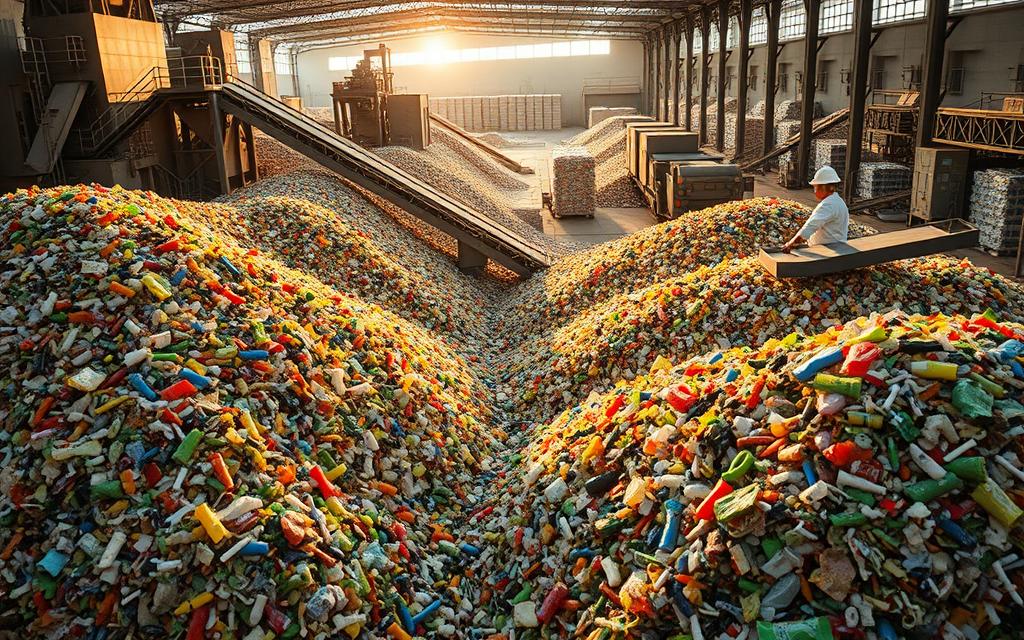
Supermarket giants have faced criticism for allegedly misleading customers about their front-of-store recycling schemes. An investigation by the Everyday Plastic campaign group and the Environmental Investigation Agency (EIA) revealed that soft plastic waste dropped off at collection points was sent overseas and burnt for energy.
This practice contradicts the companies’ claims of being close to hitting their voluntary packaging recyclability targets. The investigation tracked 40 bundles of soft plastic waste deposited at collection points across England, revealing a troubling pattern of incineration rather than recycling.
The findings raise significant questions about the transparency of corporate sustainability initiatives and whether consumers are being misled about the environmental impact of their recycling efforts.
An investigative study has revealed the truth behind the plastic recycling claims made by major UK supermarkets. The investigation, conducted by prominent environmental organizations, tracked the fate of 40 bundles of plastic waste collected through supermarket take-back schemes.
Methodology: Tracking 40 Bundles of Plastic Waste
The research team employed a meticulous methodology to track the plastic waste, ensuring a comprehensive understanding of the recycling process. By monitoring the everyday plastic waste collected, they aimed to expose the reality behind the supermarkets’ recycling claims.
Shocking Results: 70% Incinerated, Not Recycled
The study’s findings were alarming: approximately 70% of the plastic waste collected was incinerated rather than recycled. This raises significant concerns about the effectiveness of current recycling practices and the true environmental impact of plastic waste.
The investigation was led by Everyday Plastic and the Environmental Investigation Agency (EIA UK), organizations renowned for their environmental advocacy. Alison Colclough, Research Director at Everyday Plastic, stated: “The take-back schemes are being presented as a solution, which is diverting attention from the main issue that can’t be overlooked; far too much unnecessary plastic packaging is being produced.” Lauren Weir, senior ocean campaigner at the EIA, highlighted the ethical concerns associated with exporting plastic waste, emphasizing that other countries should not bear the burden of the UK’s high production rate of this waste material.
The study’s findings underscore the need for a more effective recycling solution to address the issue of excessive plastic production. As the UK government negotiates the UN Global Plastics Treaty, these organizations are advocating for a 40% reduction in global plastic production by 2040.
Tesco and Sainsbury’s Under Fire for Misleading Customers
A recent investigation has put Tesco and Sainsbury’s under fire for allegedly misleading customers about their plastic recycling practices. The study revealed that the supermarkets’ recycling schemes have enabled them to report progress on voluntary recyclability targets despite limited actual recycling taking place.
Discrepancy Between Sustainability Claims and Practices
The investigation found a significant discrepancy between the sustainability claims made by Tesco and Sainsbury’s and their actual practices. The plastic packaging used by these supermarkets often bears instructions for shoppers to “recycle with bags at large supermarkets,” rather than more honest “do not recycle” labels.
According to ClientEarth, a prominent environmental law organization, soft plastic recycling claims on product labels, in-store signage, and website content are misleading consumers about the true environmental impact. The Waste and Resources Action Programme (Wrap) has acknowledged that the UK’s infrastructure has limited mechanical recycling capacity for soft plastics and is primarily equipped to handle commercial waste rather than post-consumer materials.
Impact on Recyclability Targets and Product Labeling
The take-back schemes implemented by Tesco and Sainsbury’s may be creating a false impression of progress while enabling continued production of difficult-to-recycle plastic packaging. This has directly affected product labeling, with an increase in soft plastic packaging now bearing instructions for shoppers to recycle.
Supermarket
Recyclability Claims
Actual Recycling Rate
Tesco
High
Low
Sainsbury’s
High
Low
The investigation suggests that these schemes may be violating consumer protection laws requiring businesses to be transparent about negative environmental impacts. As a result, Tesco and Sainsbury’s are facing criticism for their handling of plastic recycling schemes.
Supermarkets Defend Their Recycling Practices
With the spotlight on their recycling methods, Tesco and Sainsbury’s are defending their approaches. The supermarkets have faced criticism for their handling of plastic waste, with an investigation revealing that a significant portion of the plastic collected was not recycled as claimed.
Sainsbury’s Response: “Materials May Need to Be Converted for Energy”
Sainsbury’s has acknowledged that not all collected plastic can be recycled, stating that some materials may need to be converted for energy recovery. This approach is part of their strategy to manage plastic waste, although it has been met with skepticism by environmental groups.
Tesco’s Explanation: “Supplier Error” and Future Commitments
Tesco attributed the issue to a “supplier error,” claiming that materials were incorrectly shipped to an accredited processing site in Turkey. A Tesco spokesperson emphasized their commitment to reducing, reusing, and recycling packaging, citing examples such as repurposing collected plastics into fruit and vegetable planters for schools and park benches for the NHS. Tesco acknowledged that there is still progress to be made, particularly in improving the infrastructure for recycling soft plastics at scale in the UK and EU.
The company is working to implement a solution that addresses the end-of-life management of their products, focusing on reducing waste and promoting recycling and energy recovery where possible.
Conclusion: Legal Implications and Environmental Consequences
As the UK prepares to implement the Simpler Recycling legislation, set to become law on March 31, 2025, the scrutiny of Tesco and Sainsbury’s plastic recycling claims comes at a critical juncture. This new legislation will require all businesses in England to comply with stricter recycling practices, including proper separation of recyclable materials and food waste, and ensuring materials are cleaned before disposal.
Tesco and Sainsbury’s could face significant financial penalties if they continue their current recycling practices after the legislation takes effect. The investigation highlights broader systemic issues in plastic waste management, including limited domestic recycling infrastructure and the need for greater transparency in corporate sustainability claims.
The findings also coincide with final negotiations for the UN Global Plastics Treaty, with campaign groups urging the UK Government to support a 40% reduction in global plastic production by 2040. This case illustrates the gap between consumer expectations and corporate practices regarding plastic recycling, raising important questions about accountability in environmental stewardship.
FAQ
What happens to the soft plastic waste collected by supermarkets?
The soft plastic waste is supposed to be recycled, but an investigation revealed that a significant portion is incinerated for energy recovery instead of being recycled.
Are Tesco and Sainsbury’s recycling schemes effective?
The investigation found that the recycling schemes implemented by Tesco and Sainsbury’s are not as effective as claimed, with a substantial amount of plastic waste being sent for incineration rather than recycling.
What is the fate of soiled or damaged plastic packaging?
Soiled or damaged plastic packaging may need to be converted into energy, as it is not suitable for recycling.
Do Tesco and Sainsbury’s have take-back schemes for plastic waste?
Yes, both Tesco and Sainsbury’s have collection points in their stores where customers can return their soft plastic waste for recycling.
How do supermarkets manage their plastic waste?
Supermarkets work with suppliers to manage their plastic waste, but the investigation revealed discrepancies between their sustainability claims and actual practices.
What are the environmental implications of the supermarkets’ recycling practices?
The investigation highlighted the potential environmental consequences of the supermarkets’ recycling practices, including the impact on recyclability targets and product labeling.
Are there any plans to improve the recycling schemes?
Tesco has committed to improving its recycling practices, citing a “supplier error” as the cause of the issue, while Sainsbury’s has explained that materials may need to be converted into energy.
Recycling tissue paper is tricky. It’s technically recyclable, but many recycling centres won’t take it. This is because tissue paper’s unique make-up makes recycling expensive…
Today, recycling razor blades properly is essential. It’s crucial for our safety and the planet. The latest shaving technology has made blades sharper. This makes…
We use cookies on our website to give you the most relevant experience by remembering your preferences and repeat visits. By clicking “Accept”, you consent to the use of ALL the cookies.
This website uses cookies to improve your experience while you navigate through the website. Out of these cookies, the cookies that are categorized as necessary are stored on your browser as they are essential for the working of basic functionalities of the website. We also use third-party cookies that help us analyze and understand how you use this website. These cookies will be stored in your browser only with your consent. You also have the option to opt-out of these cookies. But opting out of some of these cookies may have an effect on your browsing experience.
Necessary cookies are absolutely essential for the website to function properly. This category only includes cookies that ensures basic functionalities and security features of the website. These cookies do not store any personal information.
Any cookies that may not be particularly necessary for the website to function and is used specifically to collect user personal data via analytics, ads, other embedded contents are termed as non-necessary cookies. It is mandatory to procure user consent prior to running these cookies on your website.
We use cookies to ensure that we give you the best experience on our website. If you continue to use this site we will assume that you are happy with it.