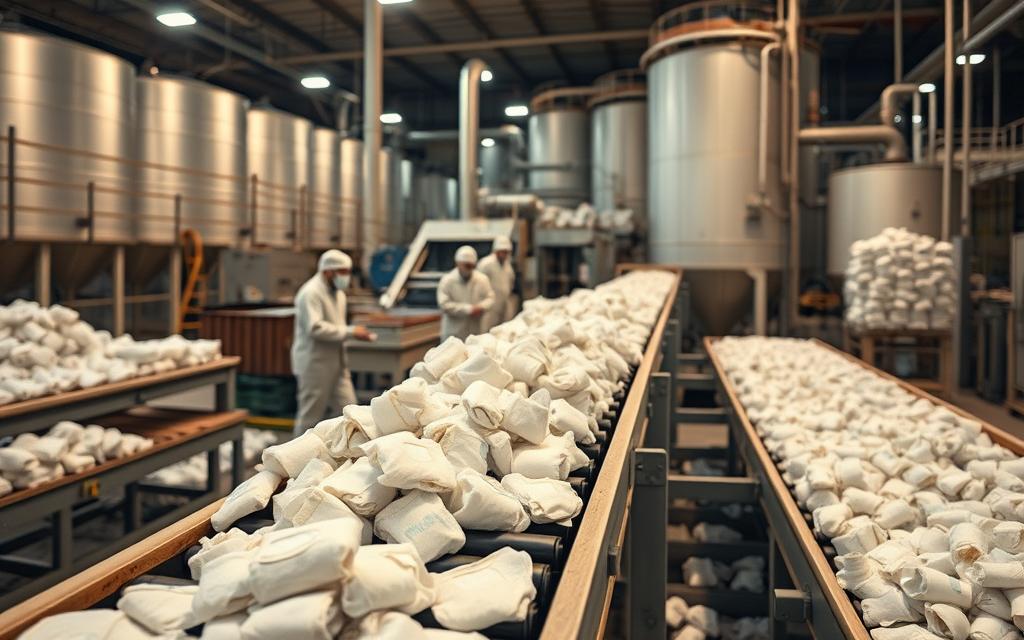
The disposal of nappies has become a significant environmental concern due to the vast number used daily. Disposable nappies contribute substantially to landfill waste, prompting consumers to seek eco-friendly disposal methods.
Boots, a leading health and beauty retailer, is known for its sustainability initiatives. Many customers wonder if they offer a nappy recycling program. While Boots has comprehensive recycling schemes in place, nappies pose unique recycling challenges.
This article will explore whether nappies can be recycled at Boots, alternative disposal methods, and how to maximize the benefits from their existing recycling programs. Understanding proper disposal methods is crucial for reducing environmental impact.
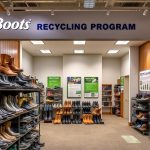
Boots, a leading retail pharmacy chain, has been at the forefront of sustainability efforts through its innovative recycling initiatives. The company has demonstrated a strong commitment to reducing environmental impact through various programs, with a particular focus on the beauty and skincare sectors.
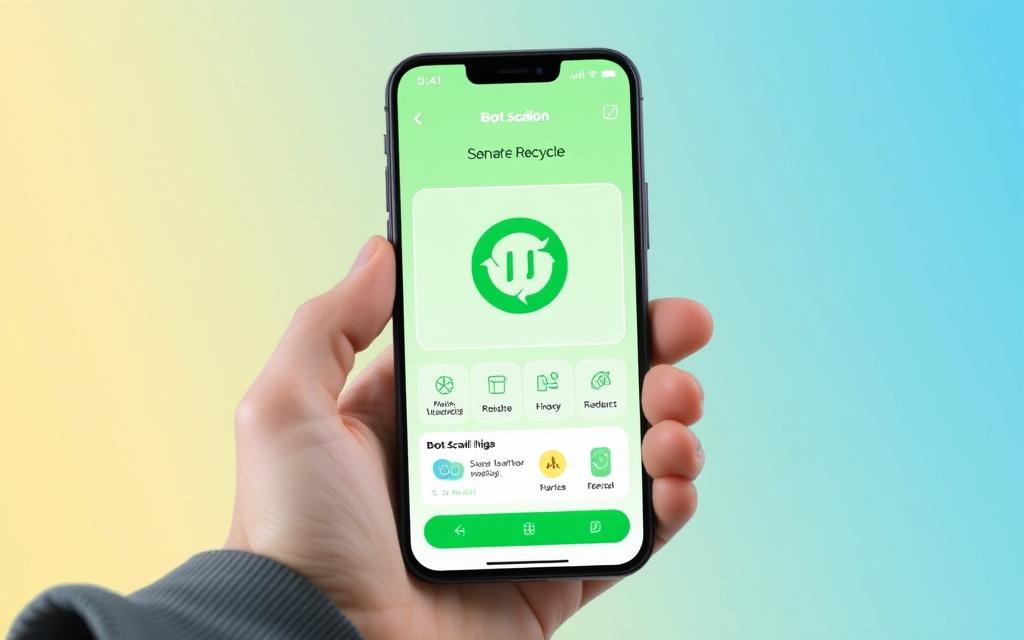
The Boots Scan2 Recycle program is a cornerstone of its recycling efforts. Launched to encourage customers to recycle their used beauty and skincare products, this initiative allows users to upload photos of empty product containers via the Scan2 Recycle app or website for verification. Once verified, customers can deposit the items into designated recycling bins located in participating Boots stores. “We’re proud to be leading the way in retail sustainability,” says a Boots spokesperson, highlighting the company’s dedication to eco-friendly practices.
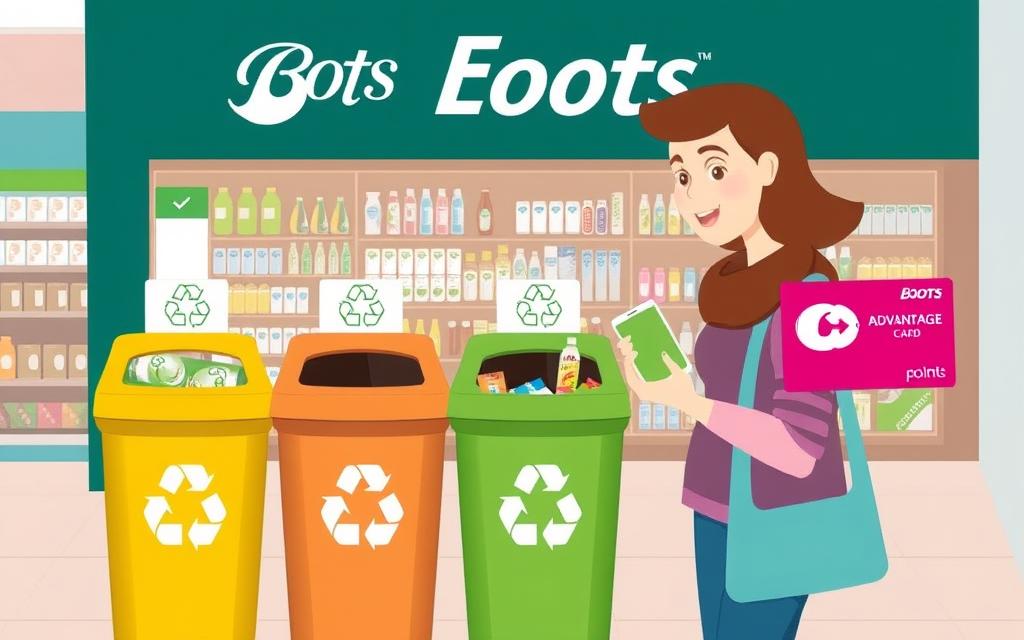
For every five qualifying items recycled and a subsequent purchase of £10 or more within three days, customers receive £5 worth of Advantage Card points. This loyalty scheme integration not only incentivizes recycling but also rewards customer loyalty. Boots accepts a variety of beauty and skincare products for recycling, making it a comprehensive program that caters to a wide range of customer needs.
By implementing these recycling initiatives, Boots aims to significantly reduce waste and promote sustainability in the retail sector. The company’s efforts have positioned it as a leader in retail sustainability, with ongoing partnerships with recycling organizations to enhance its programs.
Key aspects of Boots’ recycling initiatives include:
A comprehensive recycling program that accepts various beauty and skincare products.
Incentives through the Boots Advantage Card loyalty scheme.
Partnerships with recycling organizations to improve sustainability.
As Boots continues to evolve its recycling programs, it remains committed to making a positive environmental impact. By recycling more and wasting less, customers can contribute to a more sustainable future.
The Truth About Nappy Recycling at Boots
The issue of nappy recycling is complex, and understanding Boots’ stance on this matter is crucial for environmentally conscious consumers. Nappy recycling poses significant challenges due to the mixed materials used in their construction and the biological waste they contain.
Boots, a prominent retailer in the health and beauty sector, has implemented various recycling initiatives. However, their official policy regarding nappy disposal and recycling needs clarification. Currently, Boots does not recycle nappies through their standard recycling programs.
The reason nappies are not accepted in standard recycling programs, including at Boots, is due to their composition. Nappies are made from a mix of materials, including absorbent gel, plastic, and cellulose, which complicates the recycling process. Moreover, the biological waste contained in nappies requires specialized handling.
There are differences between recyclable items and those that must go to specialized facilities. While some materials like plastic bottles or cardboard can be processed through conventional recycling facilities, items like nappies require dedicated waste management infrastructure.
Recyclable Items
Specialized Recycling
Plastic Bottles
Nappies
Cardboard
Batteries
Glass Jars
Electronic Waste
As for future plans, while Boots has not announced any specific initiatives to include nappies in their recycling scheme, they continually review and update their recycling programs to be more inclusive and environmentally friendly.
In comparison to other major retailers, Boots’ approach to nappy disposal is similar in that most do not offer nappy recycling through their standard programs. However, some retailers are exploring pilot programs for nappy recycling, indicating a potential shift in how nappy waste is managed in the future.
The Boots recycling program has specific guidelines on what items are accepted. While nappies are not currently part of their recycling program, many other baby-related items and beauty products might be eligible.
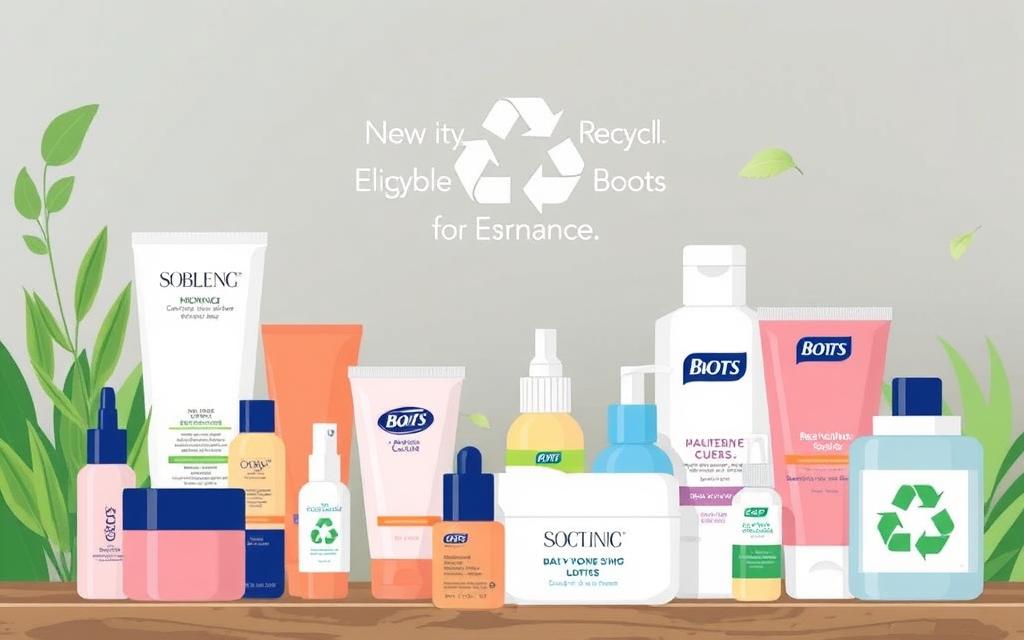
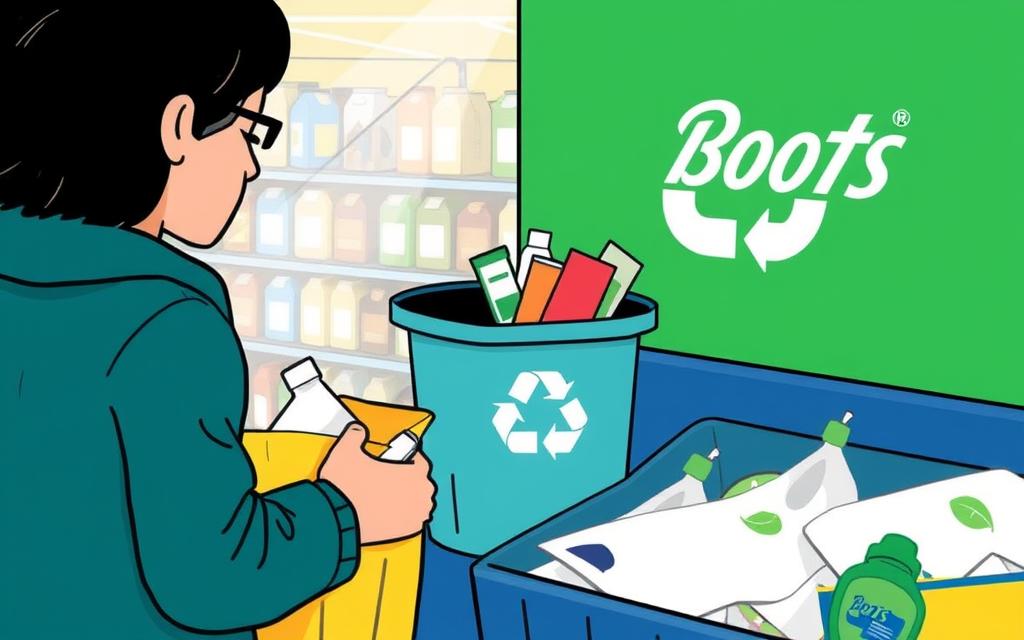
Boots accepts a range of skincare and beauty empties, including cleanser tubes, serum bottles, moisturizer tubs, and night cream pots. These items should be empty and clean before being recycled.
Accepted Items
The following categories of items are accepted by Boots for recycling:
Beauty products: empty containers like lipstick tubes, mascara wands, and foundation bottles.
Skincare containers: empty jars, bottles, and tubes used for various skincare products.
Baby products: empty baby lotion bottles, baby shampoo containers, and other similar items.
Boots declines items that can easily be recycled at home or are dangerous/hazardous, such as aerosols, medicines, perfume, or nail varnish. The criteria for acceptance are based on the item’s material and the ability to process it through their recycling facilities.
To identify if a product is recyclable according to Boots’ guidelines, check if it’s made of a material that can be processed and if it’s empty and clean. Some items may require special preparation, like removing labels or caps, before they can be recycled.
By participating in Boots’ recycling program, customers can contribute to reducing waste and promoting sustainability in the beauty and skincare industry.
The Boots Scan2 Recycle program is revolutionizing the way customers recycle their empty beauty products. By leveraging a simple, user-friendly app, customers can participate in the recycling scheme and earn rewards.
To start, users create an account on the Scan2 Recycle website or through the app and link it to their Boots Advantage Card. This integration allows for seamless tracking of rewards and personalized offers.
The next step involves taking photographs of empty products for verification. Users select the brand, product type, and packaging type, making it easier for the system to process the items. Approval typically occurs within 24 hours, after which users can take their empties to a participating Boots store.
At the store, customers scan the QR code on the recycling bin using the Boots app and deposit their items. The reward is then credited to their account, visible both in the app and via email. These rewards can be redeemed on purchases over £10 in-store.
The Scan2 Recycle scheme is designed to be straightforward, making it easy for customers to recycle and earn benefits. By using this program, Boots customers can contribute to a more sustainable environment while enjoying exclusive rewards.
Recent updates have enhanced the user experience, making it more efficient to recycle and track rewards. The program differs from other recycling initiatives by offering a tangible reward system linked directly to the user’s Advantage Card.
Step-by-Step Guide to Using Boots’ Recycling Service
Using Boots’ recycling service is a simple, step-by-step process that rewards you with Advantage Card points. To begin, you need to download the specific Boots recycling app, which is different from the regular Boots app.
Step 1: Download and Set Up the Boots Recycling App
First, download the Boots recycling app and create an account. This will require linking your Advantage Card to the recycling account. If you don’t have an Advantage Card, you can sign up for one directly through the app or on the Boots website.
Step 2: Find and Submit Products for Recycling
Find 5 tricky to recycle products, take photos within the app, and fill in the product descriptions. Wait 24 hours for approval. You can check the status of your submissions within the app. If your items are rejected, you can review the reasons and resubmit if necessary.
Visit an approved Boots branch with a recycling bin. Scan the QR code at the recycling bin using the app, follow the in-app instructions, and deposit your items in the green bin.
For more detailed information on how to use the Boots Scan2 Recycle scheme, you can refer to this review or visit the Boots recycling guide.
Step 4: Activate Your Voucher and Redeem Points
Once you’ve deposited your items, activate your voucher for 500 points when you’re ready to spend £10+ in-store. At checkout, scan your Advantage Card first, then your items, and finally redeem the in-app voucher.
By following these steps, you can easily recycle your products through Boots and earn rewards. If you encounter any issues, the app provides troubleshooting tips and support.
Participating in Boots’ recycling initiative not only helps the environment but also earns you Advantage Card points. The Boots recycling scheme is designed to reward customers for recycling qualifying items and making a purchase in-store.
To earn Advantage Card points, customers must recycle 5 qualifying items and make a purchase of £10 or more in-store within 3 days. The voucher generated must be shown along with the Boots Advantage card at checkout. Users can recycle up to 5 empties 8 times per month, making it a consistent way to earn rewards.
The current offer allows customers to earn 500 points (£5) when they recycle 5 qualifying items and spend £10+ in-store. It’s essential to note that the purchase must be made in-store, not online, and the voucher must be presented at checkout.
Customers can check their Advantage Card point balance after participating in the recycling program by logging into their Boots account or asking in-store staff. The points earned through recycling can be redeemed against future purchases, providing a tangible benefit to consistent recyclers.
By participating in Boots’ recycling program, customers not only contribute to environmental sustainability but also gain rewards. This initiative aligns with other ways of earning Advantage Card points, such as through purchases, and offers a unique opportunity to get free products or discounts.
Finding Boots Stores with Recycling Bins
To recycle at Boots, you first need to identify stores that have recycling facilities. Boots has expanded its recycling program across numerous stores nationwide, making it increasingly convenient for customers to participate.
You can easily locate a participating Boots store using the Scan2 Recycle website or app. By enabling location settings on your device, you can find the nearest store with recycling bins. These bins are typically located near the No7 counter or sometimes near the tills.
Locating Recycling Bins
Use the Scan2 Recycle app to find stores with recycling bins.
Enable location settings to identify the correct bin.
Look for bins near the No7 counter or tills.
When planning a visit to a Boots store specifically for recycling, it’s a good idea to verify that the store is still participating in the program. You can do this by checking the Scan2 Recycle app or calling the store directly.
Region
Availability of Recycling Bins
Urban Areas
High
Rural Areas
Moderate
Boots continues to expand its recycling program, adding new stores regularly. If your local store doesn’t have recycling facilities, you can check for alternative drop-off locations or wait for the program to expand to your area.
Limitations and Restrictions of Boots’ Recycling Program
Boots’ recycling initiative, while commendable, has specific restrictions that dictate its usage and benefits. The program is designed to encourage responsible disposal of certain products, but it is not without its limitations.
The Boots recycling scheme does not accept all types of items. For instance, aerosols, medicines, perfume, and nail varnish are excluded due to safety concerns or because they cannot be recycled. Additionally, items that can easily be recycled at home are also declined, as the program focuses on products that require specialized recycling facilities.
Nappies, a significant concern for many parents, are not currently accepted in Boots’ recycling program. This exclusion highlights the need for alternative nappy recycling solutions.
There are also time-sensitive restrictions related to the rewards earned through recycling. The voucher for Advantage Card points must be used within 30 minutes of activation, and the £10 purchase must be made in-store, not online.
Item
Accepted for Recycling
Reason for Exclusion
Aerosols
No
Dangerous or cannot be recycled
Nappies
No
Not currently accepted
Perfume
No
Dangerous or cannot be recycled
Boots is working to address these limitations and expand its recycling program to include more items and improve customer convenience.
Beyond Boots’ recycling initiatives, several alternative nappy recycling services are available in the UK. Parents can explore specialized nappy recycling services that operate outside of Boots, offering comprehensive solutions for nappy disposal.
Some local councils or municipalities have their own nappy recycling programs. These programs may offer convenient drop-off locations or curbside collection services, making it easier for parents to participate in nappy recycling.
Specialized nappy recycling services work by collecting used nappies and processing them to extract recyclable materials. The materials are then used to manufacture new products, reducing waste and promoting sustainability.
For those who prefer the convenience of recycling from home, mail-in nappy recycling programs are available. These programs allow parents to send used nappies to recycling facilities, providing an easy and environmentally friendly disposal method.
Eco-friendly disposable nappy brands often offer their own recycling programs, providing an integrated solution for parents who prefer these brands. Additionally, cloth nappy options offer a reusable alternative to disposable nappies, significantly reducing waste.
Biodegradable nappies differ from standard disposables in terms of their environmental impact, as they are designed to break down more easily. Innovations in nappy recycling technology are continually emerging, offering improved methods for processing and recycling nappy waste.
Parents looking to reduce their nappy waste footprint can access various resources, including guides on nappy recycling and eco-friendly nappy options. Comparing the effectiveness and convenience of different nappy disposal and recycling options can help parents make informed choices.
Environmental Impact of Nappy Waste
The environmental impact of disposable nappy waste is a growing concern worldwide, with millions of nappies ending up in landfills every year. The sheer volume of nappy waste contributes significantly to environmental degradation.
In the United States alone, it’s estimated that over 3.5 million tons of nappy waste are generated annually. Disposable nappies are made from a combination of materials, including absorbent gel, plastic, and paper, making them difficult to recycle.
Nappies can take up to 500 years to decompose in landfill conditions, releasing methane, a potent greenhouse gas.
The production of disposable nappies requires significant resources, including wood pulp and petroleum-based products, contributing to their substantial carbon footprint.
In contrast, cloth nappies, while requiring energy and water for washing, can be reused multiple times, reducing the overall environmental impact.
Proper disposal and recycling of nappies can mitigate some of the environmental harm. Although nappy recycling is not widely available, initiatives like Boots’ recycling program for certain baby-related products, such as wipe containers and potentially toothpaste tubes, can still make a positive impact.
Consumer awareness about nappy waste is driving changes in industry practices, with innovations in biodegradable nappy technology emerging as a potential solution. By adopting sustainable practices and supporting recycling programs for beauty and skincare products, consumers can contribute to reducing environmental harm.
Recycling other baby-related products is a step in the right direction, and when combined with responsible disposal practices, it can help minimize the environmental footprint associated with nappy waste.
Maximizing Benefits from Boots’ Recycling Programs
Making the most of Boots’ recycling schemes requires a strategic approach to your shopping and recycling habits. To start, plan your shopping trips to coincide with recycling drop-offs for maximum efficiency. This way, you can earn Advantage card points while completing your shopping.
Timing is crucial when it comes to activating recycling rewards. Ensure you time the activation of your rewards to coincide with your planned purchases, making the most of the 500 points you receive for recycling. You can recycle up to 5 empties 8 times per month, so plan accordingly.
To maximize your savings, combine recycling rewards with other Boots promotions and offers. This can lead to significant discounts on your skincare and beauty purchases. Always check the store for available offers before activating your recycling rewards.
Efficiently collecting and storing recyclable items between store visits is also essential. Designate a specific area in your home for collecting qualifying items, making it easier to recycle them during your next shopping trip.
Tracking your recycling rewards and monitoring point accumulation over time is vital. Use your Boots Advantage card to track your points and plan your future purchases accordingly.
To get the most out of your recycling rewards, consider strategies for reaching the minimum spend threshold when redeeming your points. This might involve planning larger shopping trips or combining rewards with other promotions.
Stay informed about seasonal promotions that might enhance your recycling rewards. Boots often runs special offers that can be combined with recycling rewards, leading to even greater savings.
Involving family members in collecting recyclables can increase the number of items you recycle, maximizing your benefits from Boots’ recycling programs. Make it a family effort to collect recycle Boots qualifying items.
Finally, stay up-to-date with any changes or improvements to Boots’ recycling programs. Regularly check the Boots website or visit your local store to learn about new initiatives or updates to the existing program.
Conclusion
Upon reviewing Boots’ recycling policies and practices, it’s apparent that the company is dedicated to reducing waste and promoting recycling, even if nappies are not currently included. Boots offers a comprehensive recycling program that covers a wide range of products, including skincare and beauty items, through their Beauty Cycle Scheme and blister pack recycling initiatives.
The Scan2 Recycle program is a key component of Boots’ recycling efforts, allowing customers to easily recycle qualifying items. By following a simple step-by-step process, customers can earn Advantage Card points while contributing to environmental sustainability. This program not only encourages eco-friendly practices but also rewards customers for their participation.
While nappy recycling is not currently available at Boots, customers can explore alternative options outside of the Boots recycling scheme. It’s essential to make environmentally conscious choices regarding nappy disposal to minimize waste. By participating in Boots’ existing recycling programs, customers can significantly reduce their environmental footprint.
As we look to the future, it’s likely that recycling programs will continue to evolve, potentially including more product categories like nappies. In the meantime, customers can make a positive impact by recycling eligible items at Boots and exploring sustainable nappy options. By doing so, we can all contribute to a more sustainable future.
Get free rewards and contribute to a greener environment by recycling your qualifying items at Boots today. Take the first step towards a more sustainable lifestyle by embracing the Boots Recycling Scheme and exploring eco-friendly alternatives for your daily needs.
FAQ
What items can I recycle at Boots stores?
Boots accepts various beauty and personal care product empties, including skincare and beauty product containers, toothpaste tubes, and other eligible items through their recycling scheme.
How do I use the Boots Scan2 Recycle program?
To participate, simply download the Boots app, scan the barcode of your empty product containers, and deposit them into the designated recycling bins in-store.
Can I earn Advantage Card points by recycling at Boots?
Yes, members can earn points for participating in the recycling program through the Boots app and their Advantage Card account.
Are there any restrictions on the types of products that can be recycled?
Yes, not all products are eligible. Check the Boots app or in-store for details on qualifying items and to confirm the types of containers accepted.
How do I find a Boots store with recycling facilities?
Use the Boots store locator on their website or through the app to find stores with recycling bins and participating in the recycling program.
What are the benefits of participating in Boots’ recycling programs?
By recycling, customers contribute to reducing waste, and they can also earn rewards and voucher discounts through their Advantage Card.
Can I recycle blister packs at Boots?
Yes, certain blister packs are accepted as part of their recycling scheme; check the Boots app for specific details on eligible products.
How does the Advantage Card rewards system work?
For every eligible item recycled, members can earn points on their Advantage Card, which can be redeemed for discounts and other rewards.
Recycling is key for keeping our environment healthy. It cuts down on waste and pollution. It also saves our natural resources and reduces greenhouse gas…
The world’s growing need for technology has made electronic waste a big problem. In 2019, 53.6 million metric tons of e-waste were created globally. Laptops…
Recycling aerosol cans helps us take care of the environment. Throwing them away the wrong way can be dangerous because they’re pressurised. Luckily, about 80-85%…
We use cookies on our website to give you the most relevant experience by remembering your preferences and repeat visits. By clicking “Accept”, you consent to the use of ALL the cookies.
This website uses cookies to improve your experience while you navigate through the website. Out of these cookies, the cookies that are categorized as necessary are stored on your browser as they are essential for the working of basic functionalities of the website. We also use third-party cookies that help us analyze and understand how you use this website. These cookies will be stored in your browser only with your consent. You also have the option to opt-out of these cookies. But opting out of some of these cookies may have an effect on your browsing experience.
Necessary cookies are absolutely essential for the website to function properly. This category only includes cookies that ensures basic functionalities and security features of the website. These cookies do not store any personal information.
Any cookies that may not be particularly necessary for the website to function and is used specifically to collect user personal data via analytics, ads, other embedded contents are termed as non-necessary cookies. It is mandatory to procure user consent prior to running these cookies on your website.
We use cookies to ensure that we give you the best experience on our website. If you continue to use this site we will assume that you are happy with it.