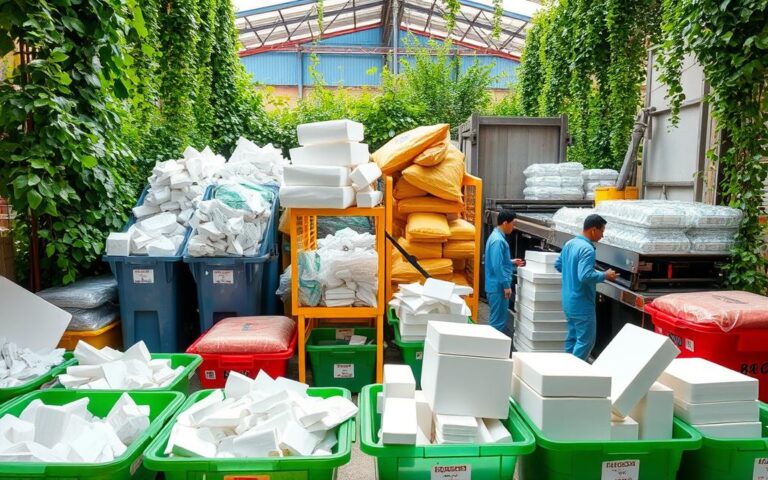
Effective waste management is crucial for maintaining a sustainable environment. In the City of Modesto, residents use a three-container system for garbage, organics, and recycling. This system helps to simplify the process of waste disposal and promotes environmentally responsible practices.
Selecting the right containers for different types of waste is essential for efficient waste disposal. By understanding the differences between recycling and garbage containers, households can significantly impact collection efficiency and waste diversion rates.
Proper waste management begins at home, where individuals can make a significant difference by choosing the right container for their waste and opting for the correct service provider.
Understanding the basics of waste management can significantly impact how we dispose of our garbage and recyclables. Effective waste management involves a systematic approach to handling different types of waste.
The Three-Container System
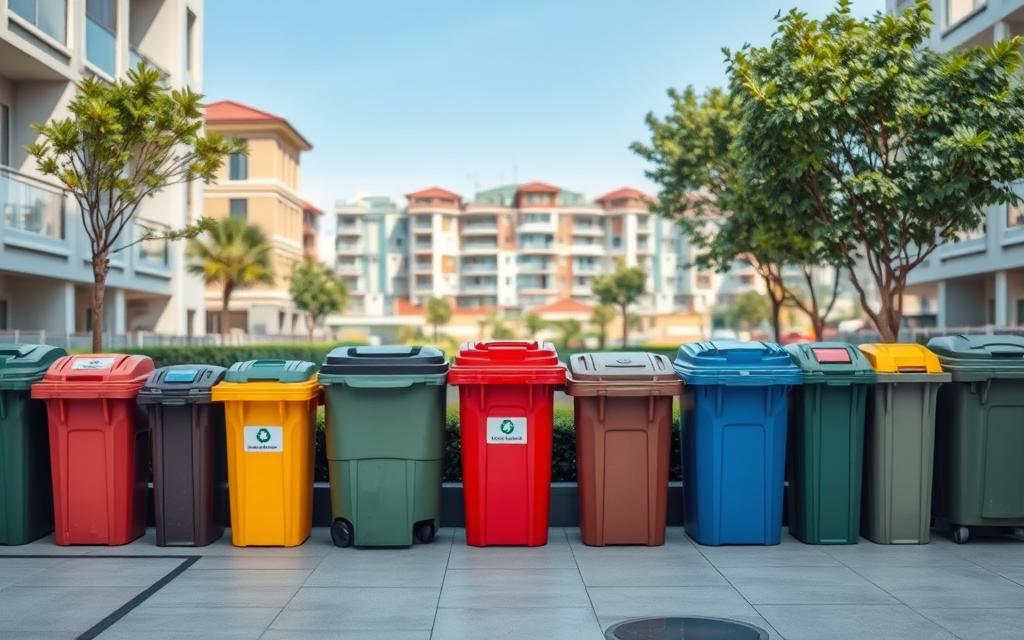
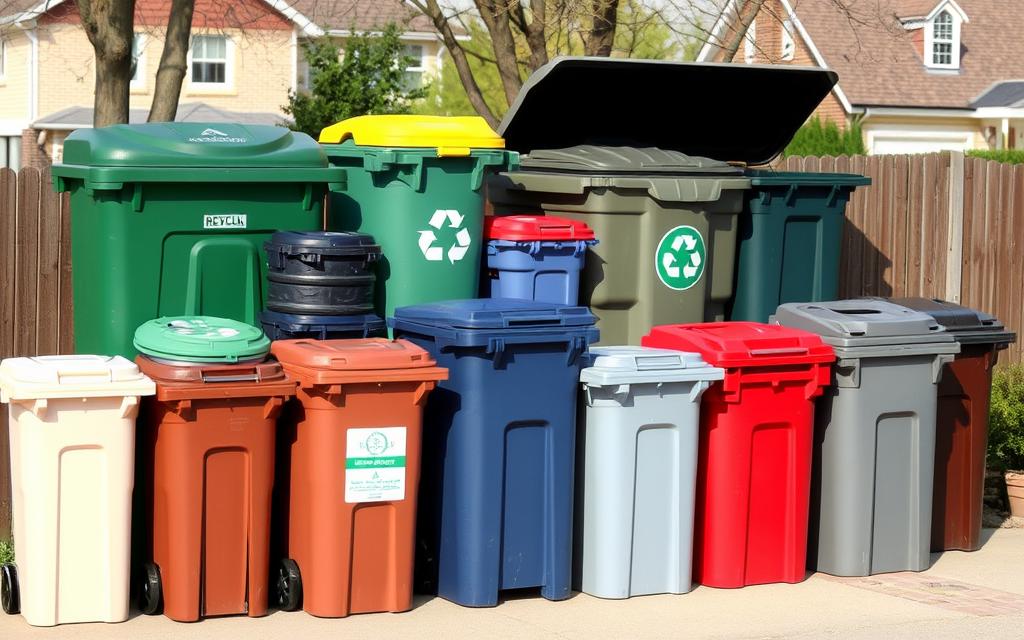
The three-container system is a standard approach used by many municipalities, including the City of Modesto. This system consists of separate containers for garbage, recycling, and organic waste.
Blue bins are designated for recyclable materials such as paper, cardboard, and certain plastics.
Green bins collect organic waste, including food scraps and yard trimmings.
Black or gray bins are for non-recyclable garbage.
Proper waste separation has numerous benefits, including reducing the volume of materials sent to landfills, conserving natural resources, and decreasing greenhouse gas emissions. By implementing a three-container system, households can make recycling and proper disposal more convenient.
Container Type
Contents
Benefits
Blue Bin (Recycling)
Paper, Cardboard, Certain Plastics
Conserves Natural Resources
Green Bin (Organics)
Food Scraps, Yard Trimmings
Reduces Landfill Waste
Black/Gray Bin (Garbage)
Non-Recyclable Waste
Proper Disposal of Non-Recyclables
“Recycling helps to conserve natural resources, reduce landfill waste, and decrease greenhouse gas emissions.” – Environmental Protection Agency (EPA)
Understanding the various types of recycling and garbage containers is crucial for effective waste management. Residential waste management relies on the right containers to keep our environment clean and sustainable.
Standard Container Sizes and Capacities
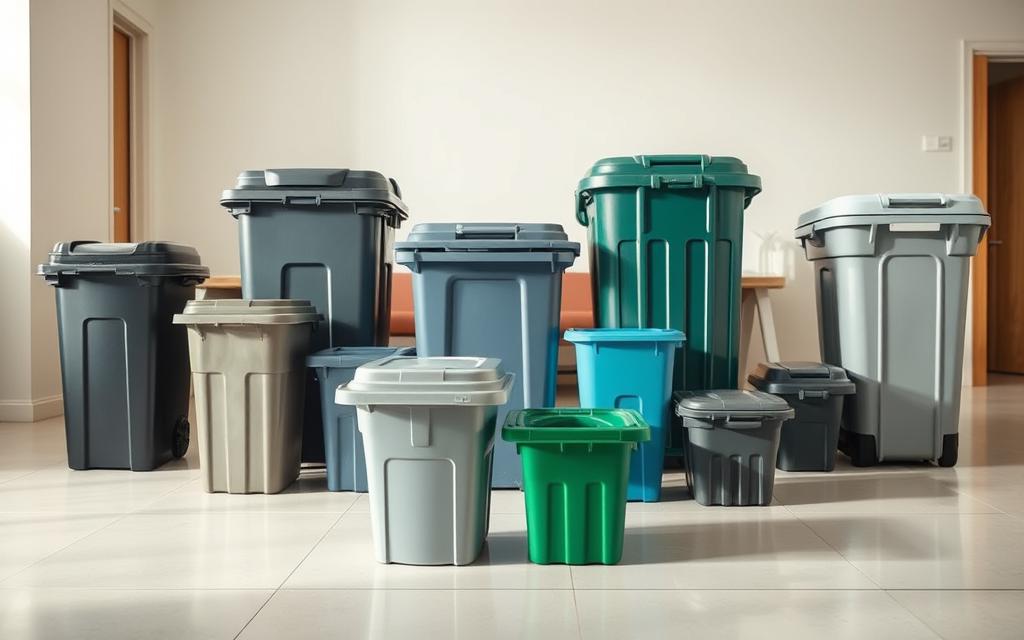
Garbage roll carts come in various sizes: 20-gallon, 35-gallon, 60-gallon, and 90-gallon. For instance, a 20-gallon bin holds about 2 standard kitchen garbage bags, while a 90-gallon bin can accommodate 5-7 bags.
Specialized Containers for Different Waste Types
Different waste streams require specialized containers. For example, blue bins are used for recycling, green bins for organic or yard waste, and black or gray bins for general garbage. Some areas also have separate containers for glass collection.
Container Features and Durability
Modern containers are made from durable plastic, such as high-density polyethylene, and are designed to withstand extreme weather conditions. They typically have a lifespan of 10+ years with proper care. Weight limits are also important, with most bins having maximum capacities between 150-330 pounds.
Selecting the Right Container Size for Your Needs
The key to efficient waste disposal lies in selecting the appropriate container size for your household needs. Your monthly waste collection charge is based on the size of your garbage container, allowing you to choose the size that best fits your needs.
Assessing Your Household Waste Volume
Accurately assessing your household waste volume is the first step in selecting the appropriate container size. This requires monitoring your typical weekly garbage output for at least two weeks. For average households producing one bag of garbage per week, a 20-gallon container is typically sufficient. Households generating three or more bags weekly may require 60-90 gallon containers.
Cost Considerations Based on Container Size
Most waste management companies base their service charges on garbage container size, with smaller bins costing less than larger ones. This creates a financial incentive for waste reduction. By recycling and reducing waste, households can potentially downsize their garbage containers, lowering their service costs. It’s also important to consider seasonal fluctuations in waste generation patterns and adjust your container size accordingly.
Proper Container Placement and Collection Guidelines
Effective waste management begins with the correct placement of garbage and recycling containers. Proper placement ensures that collection services can operate efficiently and safely.
Curbside Placement Requirements
To facilitate smooth collection, place your containers within three feet of the curb, with handles facing your home. Ensure that the containers are not blocking sidewalks, driveways, or bike lanes, and maintain adequate spacing from obstacles like parked cars or mailboxes.
Collection Day Preparation Tips
On your designated collection day, have your bins out by 6 a.m. and remove them within 24 hours after pickup. Ensure that container lids are fully closed to prevent materials from spilling or being blown away. Position recycling, garbage, and organic waste bins with sufficient spacing between them for the collection truck’s mechanical arms.
Weather and Holiday Considerations
During severe weather events, collection schedules may be delayed for driver safety. Leave your containers out until they’re serviced and check your service provider’s website for updates. Most waste collection services observe major holidays like Christmas and New Year’s Day, typically pushing collection back by one day for the remainder of that week.
Collection Day Guidelines
Requirements
Container Placement
Within 3 feet of curb, handles facing home
Container Removal
Within 24 hours after collection
Holiday Collections
Delayed by 1 day after Christmas and New Year’s Day
By following these guidelines, you can help ensure efficient and safe waste collection. For special collection needs or assistance programs, contact your service provider for more information.
Handling extra garbage or special items on collection day can be made easier with the right strategies. When facing overflow situations, most waste management companies offer options for extra waste collection.
Options for Extra Garbage and Recycling
For extra garbage, you can set out an additional bag or can on your garbage day for a fee, with a limit of 32 gallons and 40 pounds per bag or can. Many services also allow extra cardboard and paper to be placed alongside your recycling bin at no extra cost, provided they are properly bundled.
Yard Waste and Bulky Item Disposal
Yard waste, such as leaves and branches, can be disposed of using paper yard waste bags or by bundling branches with natural twine. For bulky items like furniture or large branches, schedule a special collection date with your service provider.
Special Services for Unique Situations
Many waste management companies offer special services for unique situations, including temporary dumpster rentals for home renovations or one-time large-volume pickups for estate cleanouts. Households with special needs may also qualify for additional service accommodations.
Conclusion: Making Sustainable Waste Management Choices
Choosing the right waste management containers is a significant step towards creating a cleaner, healthier environment for our communities. By understanding the importance of proper waste segregation and container selection, households can significantly reduce their environmental footprint. Efficient waste management not only conserves resources but also reduces the amount of materials sent to landfills.
Many waste management companies, like WM, offer customized solutions tailored to fit household waste and recycling needs. For more information on sustainable waste practices, you can refer to studies on waste management’s environmental impact, such as those found on PMC. By making informed choices, we can collectively create significant positive environmental outcomes.
FAQ
What type of waste can be placed in the yard waste container?
The yard waste container is designed for collecting organic materials such as leaves, branches, and grass clippings. It’s essential to ensure that the materials are properly prepared, with branches tied in bundles and leaves loose, to facilitate efficient collection.
How do I prepare my household waste for collection on the designated day?
To prepare your household waste for collection, make sure to sort your waste into the correct containers, tie any bags securely, and place them at the curb by the designated collection time. It’s also crucial to check that the lid is closed to prevent items from spilling out.
Can I dispose of diapers and other personal hygiene products in the regular waste?
No, it’s recommended to dispose of diapers and other personal hygiene products in a separate, sealed bag to prevent leakage and contamination. Check with your local waste management service for specific guidelines on disposing of these items.
What happens if I miss the collection day or have extra waste?
If you miss the collection day, you can contact your waste management service to schedule a special collection or take your waste to a designated disposal facility. For extra waste, consider using additional bags or containers as per the service provider’s guidelines.
Are there any specific rules for disposing of yard waste and tree trimmings?
Yes, there are specific guidelines for disposing of yard waste and tree trimmings. Typically, these materials should be placed in designated containers or bags, and may require special preparation, such as bundling branches. Check with your local waste management service for detailed instructions.
How can I ensure that my address is correctly associated with the waste collection service?
To ensure accurate association with the waste collection service, verify that your address is correctly listed with the service provider. You can usually do this by contacting their customer service department or checking their website.
What should I do during holiday periods when collection schedules may change?
During holiday periods, collection schedules may be altered. Check with your waste management service for specific information on any changes to the collection schedule, and plan accordingly to ensure your waste is collected.
Over 1 billion people worldwide lack proper eye care. Donating your used eyeglasses can change lives. Charities in the UK and beyond collect, clean, and…
Polystyrene is often confused with Styrofoam™. It’s a common packaging material used in egg cartons, to-go cups, and packaging peanuts. Even though it has a…
We use cookies on our website to give you the most relevant experience by remembering your preferences and repeat visits. By clicking “Accept”, you consent to the use of ALL the cookies.
This website uses cookies to improve your experience while you navigate through the website. Out of these cookies, the cookies that are categorized as necessary are stored on your browser as they are essential for the working of basic functionalities of the website. We also use third-party cookies that help us analyze and understand how you use this website. These cookies will be stored in your browser only with your consent. You also have the option to opt-out of these cookies. But opting out of some of these cookies may have an effect on your browsing experience.
Necessary cookies are absolutely essential for the website to function properly. This category only includes cookies that ensures basic functionalities and security features of the website. These cookies do not store any personal information.
Any cookies that may not be particularly necessary for the website to function and is used specifically to collect user personal data via analytics, ads, other embedded contents are termed as non-necessary cookies. It is mandatory to procure user consent prior to running these cookies on your website.
We use cookies to ensure that we give you the best experience on our website. If you continue to use this site we will assume that you are happy with it.