In the ever-expanding urban environments we inhabit today, sidewalks play a fundamental role in connecting people, businesses, and communities. Yet, beneath our feet lies a major environmental opportunity—sidewalk repairs and inspections that embrace sustainable practices and recycling. Traditionally, sidewalk maintenance has been associated with high carbon footprints, construction waste, and outdated methods. But the tides are turning.
Cities around the world are beginning to recognize the need to integrate eco-conscious approaches in urban infrastructure. From recycling concrete to reusing materials and utilizing greener alternatives, sustainable sidewalk repairs are paving the way for smarter, greener cities.
In this article, we’ll explore how municipalities and contractors are recycling the concrete jungle with sustainable sidewalk repair strategies, and why investing in these practices is not only smart but necessary.
The Environmental Impact of Traditional Sidewalk Repairs
Sidewalk repairs, while often essential for public safety, can have unintended consequences on the environment. Traditional methods involve:
Tearing out large concrete slabs
Producing construction waste
Using energy-intensive materials
Transporting debris to landfills
Pouring fresh concrete, which has a large carbon footprint
According to the EPA, concrete production contributes approximately 8% of global CO₂ emissions. So, when thousands of square meters of sidewalks are being repaired across cities each year, the environmental cost is significant.
Recycling in the context of sidewalk repairs means:
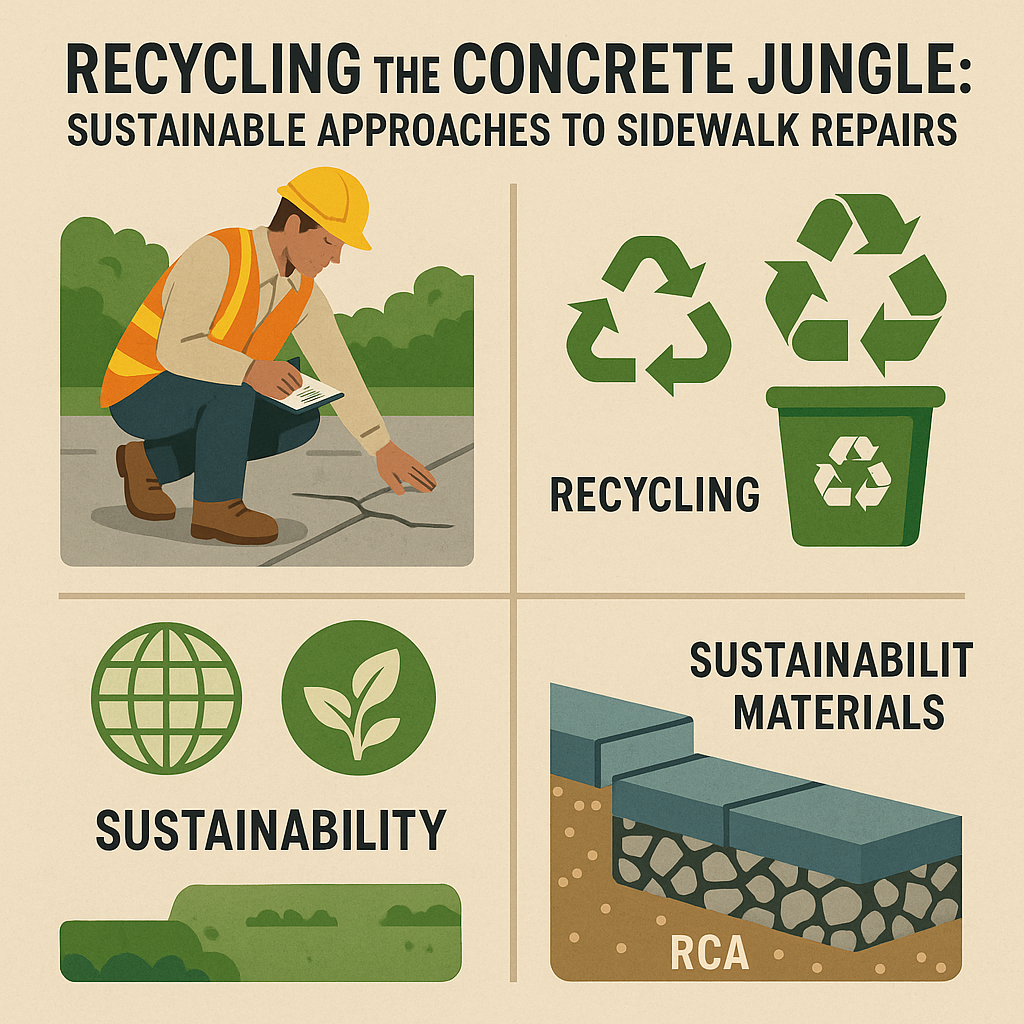
Reusing broken concrete as aggregate or base material
Recycling asphalt and debris into new surfaces
Using eco-friendly concrete mixes made with fly ash, slag, or recycled plastics
Repurposing old paving slabs in landscaping or pathways
This practice not only reduces the volume of material sent to landfills but also lowers the demand for virgin materials, thereby conserving resources and reducing greenhouse gas emissions.
Sustainable Materials for Sidewalk Repairs
1. Recycled Concrete Aggregate (RCA)
Concrete that’s removed during demolition can be crushed and reused as a base material for new sidewalks. It’s durable, cost-effective, and minimizes waste.
2. Porous Pavement
This innovative material allows water to seep through, reducing runoff and replenishing groundwater. Some types of porous pavement also incorporate recycled glass or plastics.
3. Rubber Sidewalks
Made from recycled tires, rubber sidewalks are flexible, safer for pedestrians, and more resistant to cracking from tree roots or weather changes.
4. Fly Ash Concrete
Fly ash is a byproduct of coal combustion and can replace a portion of Portland cement in concrete, reducing the overall carbon output of the mixture.
Benefits of Sustainable Sidewalk Repair Approaches
Switching to eco-friendly sidewalk repair strategies offers wide-ranging advantages:
1. Lower Carbon Emissions
Using recycled materials and low-carbon alternatives dramatically cuts emissions associated with cement production and transportation.
2. Cost Efficiency Over Time
While some green materials may carry higher upfront costs, they often result in longer lifespan, fewer repairs, and reduced disposal expenses.
3. Improved Stormwater Management
Materials like porous pavement improve drainage, reducing the risk of floods and soil erosion in cities.
4. Compliance with Green Building Standards
Municipalities and developers aiming for LEED certification or meeting sustainability goals benefit from incorporating recycled sidewalk solutions.
5. Enhanced Public Image
Communities increasingly demand greener infrastructure. Cities adopting sustainable sidewalk repairs show commitment to the environment and public welfare.
Implementation: From Policy to Pavement
Transitioning to sustainable sidewalk repair is not just about materials—it requires holistic planning.
Policy and Regulation
Cities should:
Mandate the use of recycled materials in public sidewalk projects
Offer incentives to contractors who adopt eco-friendly practices
Enforce stricter landfill disposal limits on construction materials
Training and Equipment
Workers and contractors must be trained in new repair techniques, such as using permeable pavers or rubber sidewalks. Upgrading tools and machinery is also crucial for compatibility with modern materials.
Public Awareness
Public education campaigns help residents understand the long-term benefits of sustainable repairs and gain support for potential temporary inconveniences during construction.
Addressing Safety and Compliance
Sustainability doesn’t mean compromising safety. In fact, proactive and eco-friendly sidewalk repairs reduce hazards such as:
Trip-and-fall injuries
Tree root upheaval
Flooding and icy buildup from poor drainage
For property owners and municipalities, neglecting sidewalk repairs can lead to sidewalk violations, costly fines, and even lawsuits. That’s where professional sidewalk violation removal services come into play.
These experts not only ensure your sidewalks meet city codes but can also recommend sustainable repair options that align with green infrastructure goals.
Real-World Examples: Green Sidewalks in Action
New York City
The NYC Department of Transportation has piloted several green sidewalk projects, including those using recycled concrete and stormwater-absorbing materials. Sidewalk violation removal services in NYC are increasingly turning to eco-friendly solutions to stay compliant and green.
San Francisco
This city has implemented porous sidewalks and recycled rubber pavers in neighborhoods with significant tree root issues, reducing the frequency of slab replacements.
Portland
Portland’s green building code encourages contractors to use locally sourced recycled materials, helping to reduce transportation emissions and support local recycling economies.
The Future of Sidewalk Repairs: Innovation & AI
Looking ahead, sustainability in sidewalk repair will be enhanced through:
Smart Sensors
Embedded sensors can monitor the condition of sidewalks in real-time, detecting cracks, uneven slabs, or erosion early—reducing the need for full-scale repairs.
AI-Powered Inspections
AI tools can assess sidewalk images or drone footage to prioritize repairs and recommend the greenest solutions available.
Bio-Based Concrete
Research is underway into self-healing concrete made from bacteria or hempcrete, drastically cutting the environmental toll of frequent repairs.
Final Thoughts: Small Steps, Big Impact
Sustainability isn’t reserved for high-profile green buildings—it begins on the ground we walk on daily. By adopting recycled materials, embracing eco-conscious repair methods, and using services like sidewalk violation removal services that align with green goals, cities can take meaningful steps toward a more sustainable, livable future.
As urban populations grow and climate concerns escalate, rethinking how we repair our sidewalks can be one of the smartest—and simplest—ways to make a lasting environmental difference.
Aluminium foil is everywhere in our daily lives, from wrapping food to packaging. It might seem handy, but its production harms the environment. Luckily, aluminium…
Plastic waste management has become a crucial issue. This is especially true for recycling plastic bags. In 2017, 26.8 million tons of plastic landed in…
Many people now prefer digital media, leaving them puzzled about how to discard old CDs. These CDs, made mainly of polycarbonate plastic, cause recycling difficulties….
We use cookies on our website to give you the most relevant experience by remembering your preferences and repeat visits. By clicking “Accept”, you consent to the use of ALL the cookies.
This website uses cookies to improve your experience while you navigate through the website. Out of these cookies, the cookies that are categorized as necessary are stored on your browser as they are essential for the working of basic functionalities of the website. We also use third-party cookies that help us analyze and understand how you use this website. These cookies will be stored in your browser only with your consent. You also have the option to opt-out of these cookies. But opting out of some of these cookies may have an effect on your browsing experience.
Necessary cookies are absolutely essential for the website to function properly. This category only includes cookies that ensures basic functionalities and security features of the website. These cookies do not store any personal information.
Any cookies that may not be particularly necessary for the website to function and is used specifically to collect user personal data via analytics, ads, other embedded contents are termed as non-necessary cookies. It is mandatory to procure user consent prior to running these cookies on your website.
We use cookies to ensure that we give you the best experience on our website. If you continue to use this site we will assume that you are happy with it.