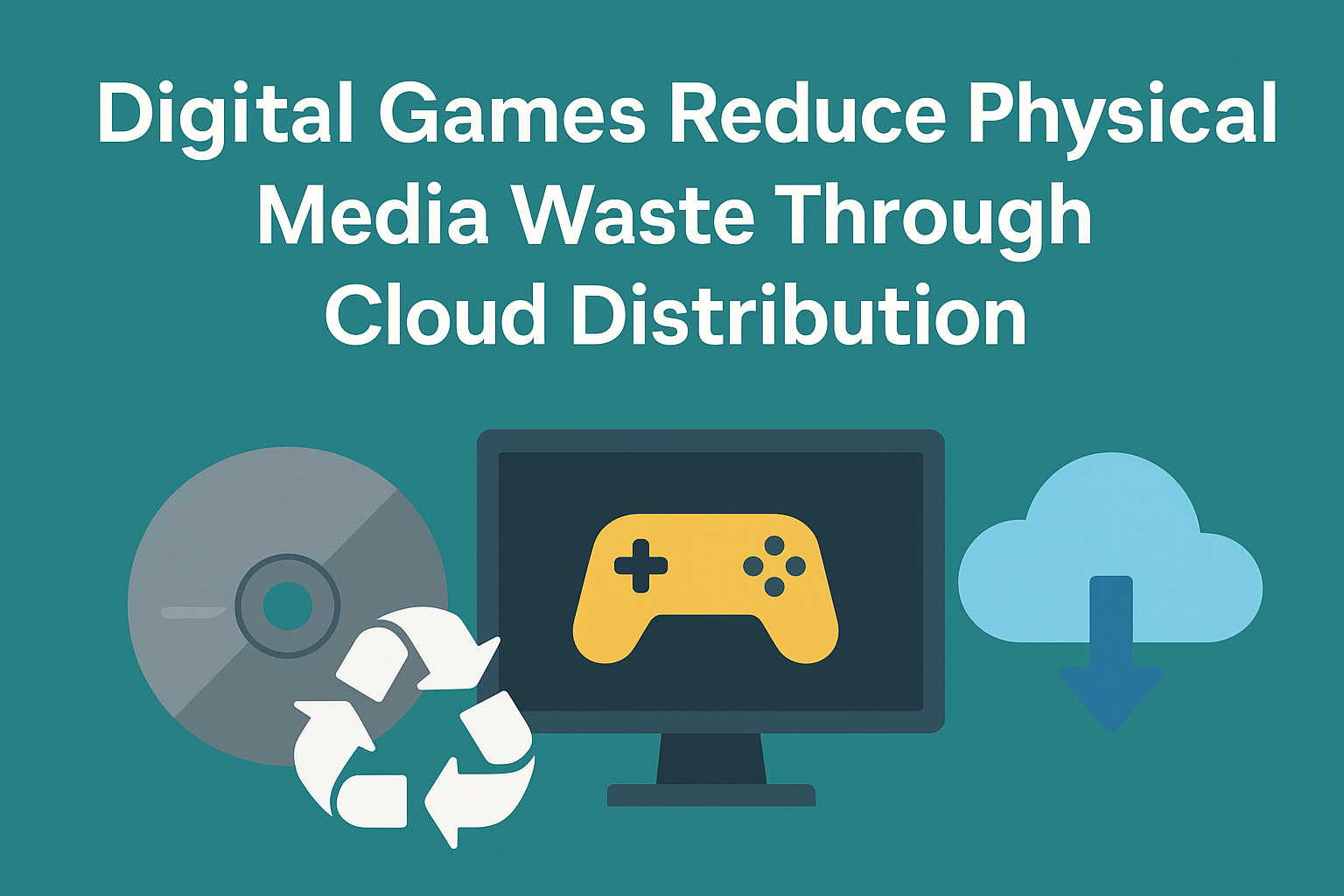
Over the last ten years, digital distribution has quietly reshaped the video game industry. There are no more big stacks of jewel cases and discs on shop walls. Entertainment is now delivered through the cloud straight to the player’s device, removing the need for plastic packaging and disc-based media.
Even niche areas like online slots, which once relied on a downloadable app or embedded flash code, now use streaming infrastructure to provide instant, waste-free gameplay within browsers and on all mobile platforms. A subtle change, but one with powerful ecological implications.
The shift from tangible formats to cloud-based provision was not at all times inevitable. In the initial years, game cartridges and discs served not only as mediums of delivery but also as symbols of prestige, collectibles, and childhood memorabilia.
Even genres like online slots, traditionally tied to downloadable formats, began adapting to this transition. But with a growing need for efficiency and environmental awareness, it started to be embraced by both publishers and platform owners to move towards an entirely digital ecosystem.
The results are tangible. Fewer plastic cases mean less petroleum used. Lowering shipping and retail overheads reduces carbon emissions as well. Digital storefronts like Steam, the PlayStation Store, and Xbox Live have normalized the concept of the “invisible library,” where access trumps ownership. Players do not need to physically have a disc to feel connected to a game; they just need a login and a connection.
Manufacturing Footprint and Material Waste
The footprint of making physical games is much larger than most people know. Every single disc uses up polycarbonate plastic and aluminum, both of which need a lot of energy to process at an industrial scale.
Plus the ink, paper inserts, shrink-wrap, and hard-case packaging—total environmental cost per unit starts to add up. Tens of millions of copies are released globally each year; multiply that, and the scale becomes sobering.
By contrast, digital distribution needs only server infrastructure and energy for data transfer. While cloud systems do consume electricity—especially in large data centers—the per-unit cost of distribution is drastically lower, both in energy and in material waste. Game companies that prioritize cloud over plastic reduce their reliance on nonrenewable resources and lessen the environmental burden per user.
Consumer Habits and Industry Incentives
Players have helped drive this shift. Digital space for games is easier to sell now with fast internet, tight physical space, and growing comfort with digital purchases. Earlier, concerns about rights to ownership or speed of downloads have mostly disappeared from the discussion.
Now gamers expect instant availability and regular updates which physical games are often unable to match efficiently. Major publishers respond by motivating digital adoption through offering exclusive downloadable content, early access, and cross-platform sync features.
Examples include Game Pass, PlayStation Plus, EA Play; subscription-based models that remove the need for physical inventory. With each new sign-up, this industry moves a step closer to being waste-free.
Environmental Advocacy and Corporate Responsibility
Cloud gaming is more than a logistical improvement—it’s increasingly a part of wider corporate sustainability goals. For instance, Microsoft, Sony, and Google have all pledged to cut emissions in their gaming divisions, citing digital distribution as a key area where they can make progress. Some studios go so far as to calculate and publish the carbon offset achieved by not shipping physical units.
A digital-first strategy can also be how broader social responsibility programs are designed. This approach, along with renewable energy sourcing for server farms and optimized compression algorithms, the benefits compound. It means less plastic, less shipping, less landfill waste—a cleaner future for digital content.
Challenges and Considerations
Data centers do fuel electricity consumption and E-waste, albeit more efficiently than mass distribution; particularly when the hardware becomes obsolete. The progress of ensuring these centers to be powered by renewable energy is still going on.
And digital preservation is another point. Physical media, once bought, tends to stay available for decades straightforwardly. Digital platforms rely on support from vendors, licenses, servers—services shutting down and wiping out a consumer’s access to their purchased games however many times. This needs addressing as the industry matures with archiving and digital continuity or else whole eras of gaming history be lost entirely.
A Model for Other Industries
The success of digital gaming as a sustainability model could lead other media sectors. Music and film have already made a giant stride, but industries including publishing, education, and software licensing are still in the pain of transition.
The efficiency delivered in game distribution — instant access, scalable infrastructure, reduced waste — can perhaps serve as a model for more responsible practices in global media.
As online platforms continue to streamline delivery systems and shorten lag time, cloud gaming will be more common than it is now. Whether a major game on a console or just a simple mobile puzzle, the future is moving towards less waste, fewer boxes, and more enjoyment.
Ultimately
It changes more than the gameplay. It changes how it affects the planet. With cloud platforms, clean and quick access to entertainment has been achieved.͏ Without physical production, many burdens have been taken off. For both leaders in the industry and players who care about the environment, it’s more than convenience; it’s a necessary evolution.
Polystyrene, also known as Styrofoam, is everywhere in our world. It’s cheap and useful, but it harms our planet. We’ll look into recycling polystyrene, the…
Every year, 40 billion plastic coat hangers are used globally. This causes a big problem for our environment. These hangers, often made of polystyrene (recycling…
We use cookies on our website to give you the most relevant experience by remembering your preferences and repeat visits. By clicking “Accept”, you consent to the use of ALL the cookies.
This website uses cookies to improve your experience while you navigate through the website. Out of these cookies, the cookies that are categorized as necessary are stored on your browser as they are essential for the working of basic functionalities of the website. We also use third-party cookies that help us analyze and understand how you use this website. These cookies will be stored in your browser only with your consent. You also have the option to opt-out of these cookies. But opting out of some of these cookies may have an effect on your browsing experience.
Necessary cookies are absolutely essential for the website to function properly. This category only includes cookies that ensures basic functionalities and security features of the website. These cookies do not store any personal information.
Any cookies that may not be particularly necessary for the website to function and is used specifically to collect user personal data via analytics, ads, other embedded contents are termed as non-necessary cookies. It is mandatory to procure user consent prior to running these cookies on your website.
We use cookies to ensure that we give you the best experience on our website. If you continue to use this site we will assume that you are happy with it.