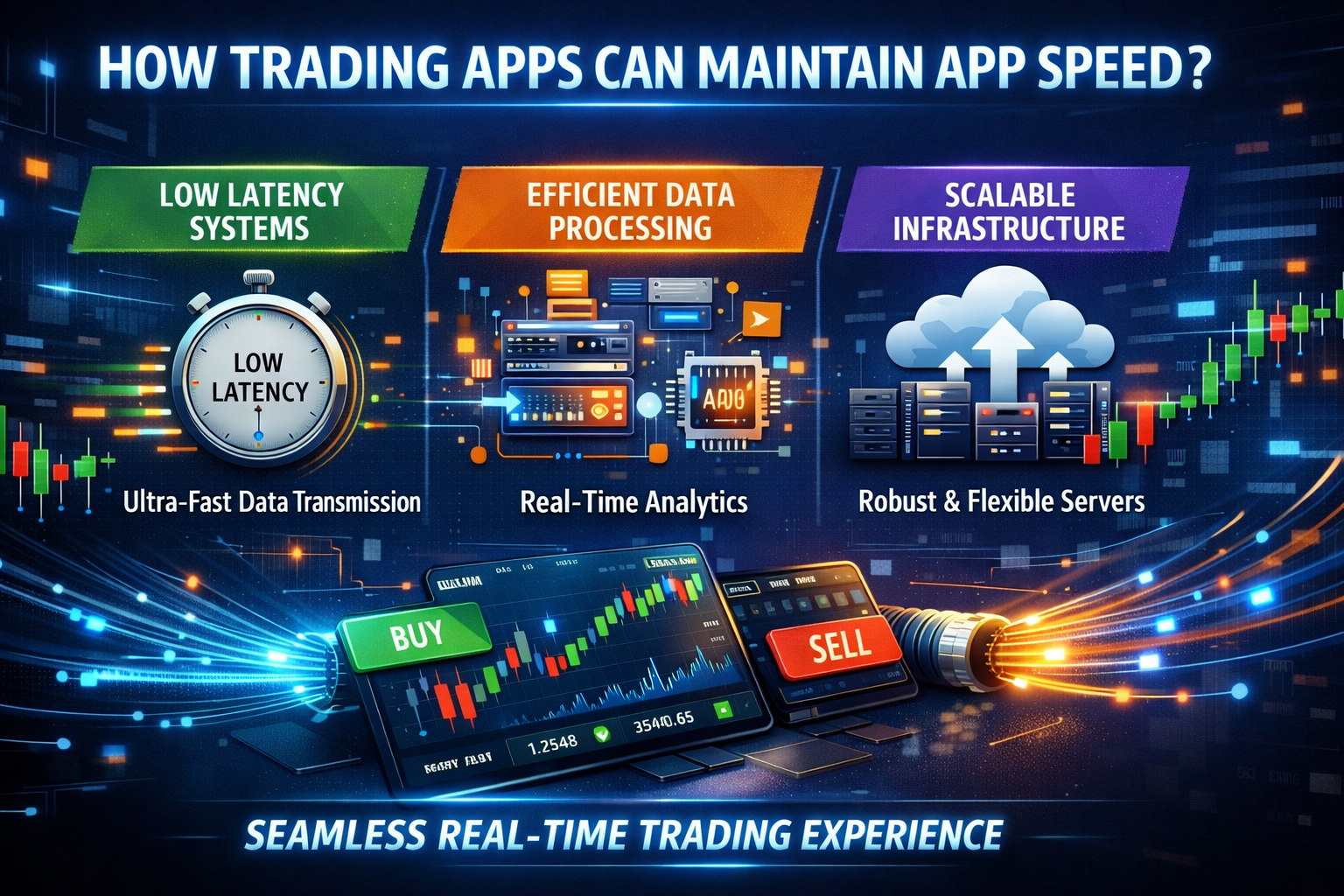
Trading apps can balance high-performance, intuitive design and diverse funding options with environmental responsibility by implementing sustainable app development, green-hosting and energy-efficient coding. Through focusing on optimised performance, apps can reduce their data consumption, extend the battery life of devices and lower their carbon footprint all while maintaining their fast user-friendly experiences.
The rapid evolution of retail investing has turned financial trading into a mobile-first industry. Modern users expect blazing app speed, diverse funding options and intuitive interface design, but these expectations aren’t without their challenges. As trading apps become more sophisticated, a heavier burden is placed on physical hardware, and this can significantly contribute to the global electronic waste crisis.
When shopping around for the best trading app in kenya, traders should prioritize not only speed, funding and interface design, but also whether a company has consciously put measures in place to reduce their carbon footprint and whether they’re implementing eco-friendly processes.
In order for the fintech industry to remain sustainable, both developers and users need to find a balance between high-performance trading and environmental responsibility. Trading apps also play a role by embracing eco-friendly alternatives without losing their edge.
Eco-Friendly Approaches to Maintaining App Speed and Performance
In a bid to maintain app speed through eco-friendly processes, many developers have switched to “Green coding” practises. This approach ensures that high-performance trading doesn’t come at the cost of excessive energy consumption or premature hardware failure.
Instead of relying on systems that consume massive amounts of energy and are always on, modern sites have started using dynamic scaling.
Green Coding
This is the practise of designing, writing and optimizing software to minimize its energy consumption and environmental impact. The core idea behind this strategy is to maximize functionality while reducing energy consumption.
Some of the ways it aims to achieve this are through:
Energy-efficient algorithms
Reduced resource usage
High-performance languages
Optimizing data and networks
Sustainable infrastructure
Green coding aligns software development with sustainability goals, reduces operational costs and minimizes the environmental footprint of trading apps.
Intuitive and Sustainable Design
When you think of intuitive design, you likely focus on how easy it is to execute a trade. However, user experience is also a powerful tool that can greatly contribute to environmental sustainability. A well-designed app doesn’t just save you time; it can also extend the life of your device’s energy and hardware.
Dark Mode Energy Revolution
Believe it or not, dark mode isn’t just a cool look for your apps, it’s also one of the most effective ways for an intuitive trading app to be eco-friendly.
Most modern smartphones that are used for trading come with OLED or AMOLED screens. In these displays, the black pixels are turned off and don’t consume any power. These high-contrast interfaces also reduce the strain on your phone’s battery.
Micro-Interactions and Energy Consumption
Eco-friendly trading apps normally use minimal haptic feedback and subtle visual cues to confirm that a trade has gone through. These micro-interactions are far more energy-efficient than complex graphical confirmations. By allowing you to execute trades in the least amount of taps possible, an app isn’t just streamlining your trading, but it’s also reducing the amount of screen time you require to manage your portfolio.
Instead of constantly hitting refresh on a high-resolution 3D chart, eco-friendly trading app interfaces use vector-based 2D graphics. These give you the same level of clarity for technical analysis, but only require a fraction of the processing power for real-time rendering. By merging usability with resource efficiency, modern trading apps are proving that a premium feel doesn’t have to be energy-intensive.
Green Funding and Sustainable Backend
Funding is often referred to as being the third pillar of modern trading apps, but few people realize that it’s a lot more than just a financial feature. The backend infrastructure required to support things like instant deposits, global e-wallets and cryptocurrency integrations has a significant environmental impact. Transitioning to green funding is an essential component for any trading app with the intention of building a sustainable future.
Paperless, Low-Carbon Transactions
Traditional banking systems were notorious for their reliance on physical infrastructure in the form of paper-based mandates and energy-draining local branches. Modern trading apps have managed to completely replace physical forms of documentation with encrypted digital verification. This has eliminated the carbon costs associated with printing paper as well as the logistics of physical mail.
Through the implementation of streamlined APIs (Application Programming Interfaces) that connect you directly to financial servers like PayPal, Stripe or Open Banking, trading apps are also able to reduce the number of unnecessary data hops between servers.
Sustainable Crypto and Blockchain Integration
With trading apps expanding to include more features for digital assets, the energy impact of blockchain has become more of a critical concern. Many modern trading apps have started prioritising the support of “green” blockchains. For example, Ethereum’s transition to Proof of Stake reduced its energy consumption by 99%.
Trading apps that use Layer 2 networks batch thousands of transactions into a single entry on the main blockchain. This drastically reduces the computational power that’s required for transactions, maintaining the app speed that you’d expect without the heavy toll on energy resources.
By integrating eco-friendly funding methods into their sites, trading apps can still offer you the speed you expect from a high-performing app while still protecting the planet.
User Education and Engagement
User education is the final piece of the puzzle. A trading app can have the most efficient code and greenest servers, but its environmental impact is ultimately determined by how millions of people use it. Through integrating sustainability into the User Interface (UI), platforms can turn passive traders into eco-conscious investors.
Many top-tier trading apps have already started incorporating gamified features into the experience in the form of streaks, badges, and progress bars in a bid to amplify user engagement. These same features can also be applied to encourage eco-friendly trading. There are many sustainable and user-friendly features that popular trading apps are incorporating as a way to help you trade in a more energy-conscious way.
Some of these include:
Energy-saving badges
Off-peak trading insights
Carbon footprint tracking
Hardware health alerts
What makes these features so effective is that they are formatted in a way that’s both engaging and stimulating. They’ll make you more excited to participate for the sake of earning a badge, or tracking your achievements will give you a strong sense of accomplishment.
Balancing Performance and Responsibility
One of the biggest challenges that modern trading apps face is finding the balance between minimizing their environmental impact and delivering top-tier performance. Thankfully, these goals aren’t mutually exclusive. In fact, many eco-friendly practises like optimization, efficiency and streamlined design can also improve an app’s performance.
You can see this in the way:
Faster apps use fewer resources
Simpler designs reduce processing demands
Efficient funding systems lower infrastructure strain
Essentially, sustainability and performance go hand in hand.
A Holistic Digital Ecosystem
Maintaining app speed, flexible funding and intuitive design has gone from being a technical challenge to becoming an environmental one. While these factors are all vital components of what you would expect from a high-performance trading platform, their environmental impact should be just as important.
Being able to execute trades while also ensuring that your carbon footprint is minimal should be the goal of every modern retail trader. With the way trading apps are rapidly evolving, and user expectations are increasing, traders don’t just want speed, flexibility and simplicity; they also want responsibility.
By investing in sustainable infrastructure, integrating smart funding systems and developing intuitive and energy-efficient interfaces, modern trading apps can make their mark both in the financial industry and the environmental one too. In the end, the most successful sites will be those that recognise that efficiency is good for both users and the environment too.
Styrofoam, or expanded polystyrene (EPS), is a topic of debate. It’s used in building insulation and packaging. But, it’s not often recycled because it’s bulky…
In the United States, waste increases by 25% during the holidays. This is mainly because of all the holiday packaging, like wrapping paper. Sadly, about…
Recycling old paint is more than just cleaning up; it’s key for eco-friendly disposal. Wrongly disposing of paint can harm our world. This article will…
Recycling batteries helps our environment and saves precious resources. Many drop-off spots are ready to take your old batteries. In Wichita, you can find over…
We use cookies on our website to give you the most relevant experience by remembering your preferences and repeat visits. By clicking “Accept”, you consent to the use of ALL the cookies.
This website uses cookies to improve your experience while you navigate through the website. Out of these cookies, the cookies that are categorized as necessary are stored on your browser as they are essential for the working of basic functionalities of the website. We also use third-party cookies that help us analyze and understand how you use this website. These cookies will be stored in your browser only with your consent. You also have the option to opt-out of these cookies. But opting out of some of these cookies may have an effect on your browsing experience.
Necessary cookies are absolutely essential for the website to function properly. This category only includes cookies that ensures basic functionalities and security features of the website. These cookies do not store any personal information.
Any cookies that may not be particularly necessary for the website to function and is used specifically to collect user personal data via analytics, ads, other embedded contents are termed as non-necessary cookies. It is mandatory to procure user consent prior to running these cookies on your website.
We use cookies to ensure that we give you the best experience on our website. If you continue to use this site we will assume that you are happy with it.