Recycling is crucial for protecting our planet. The Boots recycling scheme makes it easy for you to contribute by providing numerous drop-off points, making recycling at Boots more accessible than ever.
By participating in this recycling guide, you not only help the Earth but also receive rewards. This comprehensive guide will walk you through the process of locating the nearest drop-off locations for your old footwear, ensuring responsible disposal.
Recycling helps recover various materials from footwear, including leather, rubber, and metal, reducing landfill waste. With multiple convenient options available, you can easily find a store participating in the Boots recycling scheme.
The environmental consequences of boot waste are multifaceted and alarming. With the footwear industry producing nearly 20 billion pairs of shoes annually worldwide, the disposal of boots has become a significant environmental concern. The complex composition of boots, including materials like leather, rubber, synthetic fabrics, and metal components, makes their environmental impact substantial.
Why Footwear Recycling Matters
Footwear recycling is crucial in mitigating the environmental impact of boot waste. When boots decompose in landfills, they release methane and other greenhouse gases, contributing to climate change and global warming. Moreover, many boot materials contain chemicals that can leach into soil and groundwater, potentially contaminating local ecosystems. By recycling boots, we can reduce the demand for virgin materials and decrease the carbon footprint associated with manufacturing new footwear.
Recycling boots helps conserve resources, including water, energy, and raw materials. It’s an essential step towards reducing the environmental footprint of the footwear industry. The process not only aids in managing waste but also supports the production of new products from recycled materials, thereby closing the loop in the product lifecycle.
Statistics on Boot Waste in Landfills
The statistics on boot waste in landfills are staggering. About 85% of clothes and shoe waste ends up in landfills each year, equaling 17 billion pounds of unnecessary clothing waste annually. Footwear waste represents a significant portion of this textile waste. The average American disposes of approximately 70 pounds of textiles and footwear annually, with only 15% being recycled or repurposed. These figures highlight the need for effective boot recycling programs to manage waste sustainably.
The environmental impact of boot waste can be significantly reduced through recycling. By understanding the importance of recycling and participating in boot recycling programs, individuals can contribute to a more sustainable future for our planet.
Understanding Boot Recycling Programs
As concern for the environment grows, boot recycling programs are becoming increasingly important. These initiatives help manage the growing problem of footwear waste by providing a structured process for recycling boots.
How Boot Recycling Works
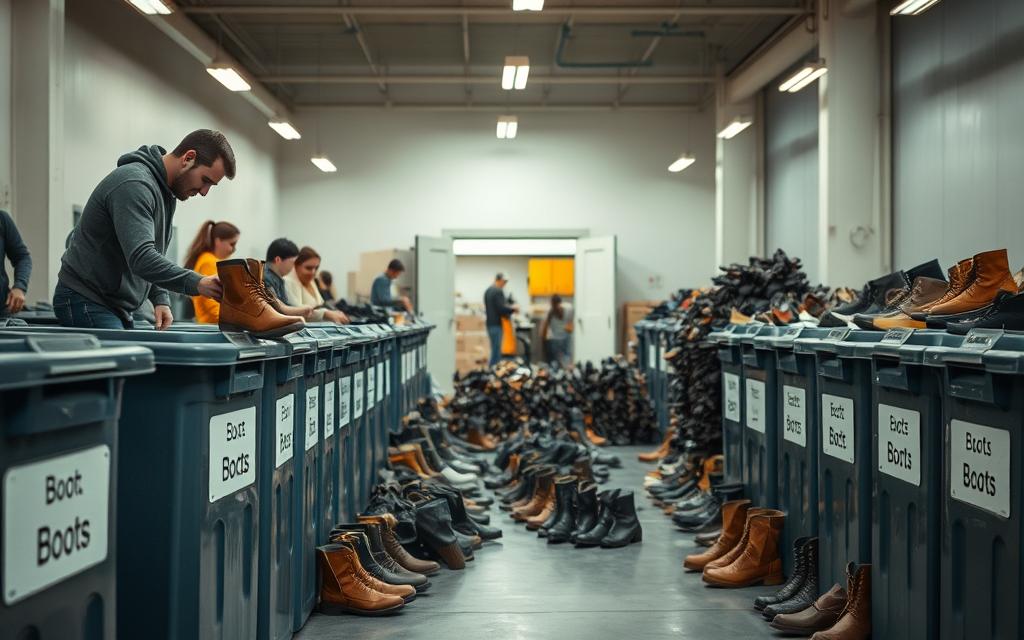
Boot recycling programs operate through specialized facilities that can process the complex mix of materials found in modern footwear. The process typically begins with collection points at retail locations, community centers, or dedicated recycling facilities where consumers can drop off their unwanted boots. The recovery process involves sorting boots by type and material composition, allowing for more efficient processing and material separation.
Collection points are set up at various locations for consumers to drop off their boots.
Boots are sorted based on their material composition.
Modern recycling technology is used to recover valuable materials.
Materials That Can Be Recovered
Modern recycling technology can recover valuable materials from boots, including rubber soles, leather uppers, metal eyelets, and synthetic fabrics. These recovered materials are then processed and transformed into raw materials that manufacturers can use in new products, creating a circular economy.
Material
Recovery Process
New Product Use
Rubber Soles
Grinding and recycling
New footwear, rubber products
Leather Uppers
Cleaning and processing
New leather goods, upholstery
Metal Eyelets
Melting and recycling
New metal products, construction materials
Some boot recycling programs partner with footwear manufacturers to create closed-loop systems where materials from old boots are directly incorporated into new footwear. This not only reduces waste but also encourages sustainable practices among manufacturers and consumers alike.
“Recycling is not just about waste management; it’s about creating a sustainable future.” – Environmental Expert
Types of Boots That Can Be Recycled
Boot recycling is not limited to a specific type; many kinds of boots can be recycled, reducing waste and promoting sustainability. Various recycling programs accept different categories of boots, ensuring that materials are recovered and reused.
Work Boots and Safety Footwear
Work boots and safety footwear, despite their durable construction, can be recycled through specialized programs. These boots often contain valuable metals and high-grade leather that recycling facilities can recover and repurpose for new products. The steel toes, reinforced soles, and heavy-duty materials in work boots make them ideal candidates for recycling.
Fashion and Casual Boots
Fashion and casual boots made from leather, suede, or synthetic materials are widely accepted at most footwear recycling locations. Designer boots and high-end footwear may contain premium materials that are particularly valuable in the recycling stream, making them excellent candidates for material recovery. This not only reduces waste but also conserves resources by reusing materials for new items.
Winter and Specialized Boots
Winter boots with insulation, waterproofing, and specialized treads require specific recycling processes but are still recyclable through many programs. Specialized footwear such as hiking boots, riding boots, and athletic boots can all be recycled, though their complex construction may require separation into component materials. Even boots with electronic components can be recycled after removing batteries or circuits.
Type of Boot
Recyclable Materials
Recycling Process
Work Boots
Steel, Leather
Specialized recycling programs
Fashion Boots
Leather, Suede, Synthetic materials
Footwear recycling locations
Winter Boots
Insulation, Rubber, Leather
Specific recycling processes
By recycling boots, consumers can significantly reduce the environmental impact of footwear waste. The process involves collecting and sorting boots, separating materials, and repurposing them into new products. This not only helps in conserving natural resources but also reduces landfill waste.
Preparing Your Boots for Recycling
Before recycling your boots, it’s essential to prepare them correctly. Proper preparation significantly improves the efficiency of the recycling process and ensures maximum material recovery. By supporting local green initiatives, you can ensure that contributed items are repurposed or recycled, rather than ending up in landfills.
Cleaning Requirements
Begin by thoroughly cleaning your boots to remove dirt, debris, and contaminants that could interfere with the recycling process or damage equipment. For leather boots, remove any treatments or polishes with a gentle cleaner to ensure the leather can be properly processed.
Disassembly Tips
Remove all non-boot elements such as insoles, laces, and any removable decorative elements, as these may need to be recycled separately or through different channels. If possible, separate different materials by removing metal eyelets, zippers, or buckles from the main boot body. This pre-sorting helps boots recycling facilities process materials more efficiently.
Preparation Step
Description
Benefit
Cleaning
Remove dirt and contaminants
Prevents damage to recycling equipment
Disassembly
Remove non-boot elements and separate materials
Improves material recovery and processing efficiency
Checking Local Guidelines
Verify specific preparation requirements with local recycling facility
Ensures compliance with facility guidelines
By following these steps, you can ensure that your boots are properly prepared for recycling, contributing to a more efficient process and helping to recycle valuable items.
Finding a convenient location to recycle your boots is crucial for reducing footwear waste. With several methods available, you can easily locate a drop-off point near you.
Using Online Recycling Directories
Online recycling directories are a great resource for finding boot recycling locations. Websites like Earth911.com and RecycleNation.com maintain comprehensive databases of recycling facilities across the United States, searchable by material type, including footwear. You can simply enter your zip code or city name to find nearby drop-off points.
Contacting Local Waste Management
Local waste management authorities often have information about specialized recycling programs in your area. Many municipalities offer recycling hotlines where you can speak directly with waste management professionals who can direct you to the nearest boot recycling options. Checking the website of your local waste management authority can provide valuable insights into available recycling services.
Recycling Apps and Tools
Mobile applications like iRecycle and Recycle Coach provide on-the-go access to recycling information. These apps allow you to locate boot recycling facilities while you’re out running errands. They often include additional features such as reminders for special collection events and updates on changing recycling guidelines in your area. For more information on recycling shoes, you can visit Soles4Souls.
Additionally, footwear manufacturers and retailers are increasingly offering take-back programs. Checking the websites of boot brands you’ve purchased from may reveal convenient recycling options. Social media community groups and neighborhood forums can also be valuable resources for finding local, community-based recycling initiatives.
National Retailers with Boot Recycling Programs
Many national retailers have taken significant steps in promoting sustainability through boot recycling programs. This shift towards environmental responsibility is reflected in their comprehensive recycling initiatives, making it easier for consumers to recycle their old boots.
Shoe Store Take-Back Programs
Several major shoe retailers have established take-back programs as part of their sustainability efforts. For instance, DSW (Designer Shoe Warehouse) partners with Soles4Souls to collect gently used footwear, including boots, for both recycling and donation. Nike’s Reuse-A-Shoe program also accepts athletic footwear, grinding down the materials to create surfaces for playgrounds and athletic facilities. These programs not only promote recycling but also encourage customers to bring in their old boots, fostering a culture of sustainability.
As Timberland, known for their iconic boots, has pioneered circular design, they offer recycling options for their products at many retail locations. This approach demonstrates a commitment to reducing waste and promoting the reuse of materials.
Outdoor and Sporting Goods Retailers
Outdoor and sporting goods retailers are also playing a crucial role in boot recycling. REI, a leader in outdoor retail, offers recycling for hiking boots and outdoor footwear at select locations, partnering with specialized recyclers to process these complex items. Similarly, The North Face’s Clothes The Loop program accepts boots and other footwear for recycling at their retail stores, offering customers discount coupons as an incentive for participation.
Many outdoor retailers, such as Patagonia, Columbia, and Bass Pro Shops, host seasonal take-back events where customers can bring in old boots for proper recycling. These national programs provide consistency in their recycling processes and accessibility across multiple locations, making them convenient options for travelers or those who move frequently.
Local Community Boot Recycling Options
Local communities offer various options for recycling boots, making it easier for residents to dispose of their old footwear responsibly. This not only helps in reducing landfill waste but also promotes sustainability.
Community Recycling Centers
Community recycling centers often accept boots as part of their textile recycling programs. These centers typically sort materials on-site and may have specific requirements for preparing boots before drop-off, such as pairing and bagging. For instance, the West Van Materials Recovery Center, Central Transfer Recycling Center, and The Washougal Transfer Station are known to offer free drop-off services for recyclable materials during business hours.
Community recycling centers provide a local solution for responsible boot disposal.
Some centers may have specific preparation requirements for the boots.
Special Collection Events
Many communities host special collection events throughout the year, specifically for hard-to-recycle items like boots. These events, often coinciding with Earth Day or America Recycles Day, bring together multiple recyclers and waste management specialists, creating one-stop opportunities for residents to recycle various materials, including footwear.
Special collection events are a great way to recycle boots and other hard-to-recycle items.
These events are usually held on specific days like Earth Day.
Textile Recycling Bins
Textile recycling bins are increasingly common in parking lots and community centers, and they often accept boots along with clothing and other fabric items. Organizations like USAgain and Planet Aid maintain networks of these collection bins, ensuring that materials collected are properly sorted for recycling or reuse.
By utilizing these local community boot recycling options, residents can contribute to a more sustainable environment. Whether through community recycling centers, special collection events, or textile recycling bins, there’s a convenient way to recycle your boots.
The Boot Recycling Process Explained
Understanding the boot recycling process is crucial for appreciating the importance of footwear recycling. The boot recycling scheme tackles the big problem of packaging waste by finding ways to recycle materials that are usually hard to recycle.
Collection and Sorting
The boot recycling process begins with collection at designated drop-off points, where boots are gathered and transported to specialized processing facilities. Initial sorting separates boots by type, condition, and material composition, with some facilities using advanced optical sorting technology to identify different materials. Boots that are still in wearable condition may be diverted for cleaning and donation.
Material Separation
The material separation phase involves both mechanical and manual recycling processes to disassemble boots into their component materials. Specialized machinery removes metal components like eyelets and zippers, which are then sorted for metal recycling streams. Rubber soles are typically ground down into crumb rubber that can be used in various applications.
Repurposing and Manufacturing
The final stage involves manufacturing new products from these recovered materials, completing the circular economy cycle. For instance, plastic materials like polypropylene can be turned into new items, such as ski gear, preventing waste from ending up in landfills. The items recycled from boots can be repurposed into various products, giving old boots a new purpose.
By understanding the boot recycling process, individuals can contribute to reducing waste and promoting sustainability in the footwear industry.
Alternative Options When Recycling Isn’t Available
When local recycling options are scarce, alternative methods can ensure responsible disposal of boots. This is particularly relevant for individuals living in areas without developed recycling infrastructure.
Donation Opportunities
Donating gently used boots is a viable alternative when recycling isn’t available. Organizations like Goodwill, The Salvation Army, and local homeless shelters accept wearable boots, especially work boots and winter footwear. International organizations such as Soles4Souls collect footwear for distribution to people in developing countries and disaster areas.
Donate wearable boots to local charities.
Support international organizations that distribute footwear globally.
Upcycling Projects
For boots that aren’t suitable for donation, creative upcycling projects offer a way to repurpose them. Ideas include transforming boots into planters for gardens, creating decorative items, or repurposing leather sections for craft projects.
Transform old boots into garden planters.
Repurpose leather for craft projects.
Mail-In Recycling Programs
Several footwear manufacturers offer mail-in recycling programs, allowing consumers to ship their old boots directly to recycling facilities, often with prepaid shipping labels. TerraCycle’s Zero Waste Box program provides a mail-in option for footwear recycling. Specialty retailers like REI and Patagonia also offer mail-back programs for their products.
Use mail-in recycling programs offered by footwear manufacturers.
Participate in programs like TerraCycle’s Zero Waste Box.
These alternative options ensure that even consumers in remote areas or regions without developed recycling infrastructure can still dispose of their boots responsibly, supporting a more sustainable approach to footwear waste.
Benefits of Recycling Your Boots
Boot recycling offers numerous advantages for both the planet and its inhabitants. By participating in a boots recycling scheme, individuals can significantly reduce the volume of waste entering landfills, where footwear can take decades or even centuries to decompose.
Environmental Advantages
The environmental benefits of recycling boots are multifaceted. Each pair of boots recycled helps conserve raw materials that would otherwise be required to manufacture new footwear, including petroleum for synthetic materials, water for processing leather, and metals for hardware. Additionally, recycling generally requires less energy than producing new materials from virgin resources, leading to reduced greenhouse gas emissions.
Conserves raw materials needed for new footwear production
Reduces greenhouse gas emissions associated with manufacturing
Decreases the amount of waste sent to landfills
For more information on recycling practices, you can visit this resource to learn about convenient sources for recycling bags.
Community and Economic Impact
Boot recycling also has a positive impact on local communities and economies. It creates jobs in the collection, processing, and manufacturing sectors of the recycling industry, contributing to local economies and often providing opportunities in areas where manufacturing has declined. The recycling industry generates tax revenue that supports community services and infrastructure, creating a positive economic ripple effect.
Creates jobs in the recycling industry
Contributes to local economies through green industry
Generates tax revenue for community services and infrastructure
By supporting boot recycling initiatives, consumers help drive demand for more sustainable product design and manufacturing processes in the footwear industry, promoting a more circular economy.
Common Challenges in Boot Recycling
The boot recycling industry faces significant challenges that need to be addressed. Recycling boots is not as straightforward as recycling other materials due to their complex composition and the lack of specialized infrastructure.
Mixed Materials Complexity
Modern boots often consist of multiple materials bonded together, making separation difficult. Adhesives used in boot construction can contaminate recyclable materials, complicating the process. For instance, boots with waterproof membranes like Gore-Tex present particular challenges because these thin layers are hard to separate from surrounding materials. The variety of boot types and constructions means that no single recycling process works for all footwear, necessitating different processing methods.
Limited Infrastructure
Limited recycling infrastructure specifically designed for footwear means that boots often end up in general textile recycling streams, which may not be optimized for their unique materials. Many regions, particularly rural areas, lack access to specialized recycling facilities. The cost of collecting, transporting, and processing boots for recycling can be high relative to the value of recovered materials, creating economic challenges for recycling programs.
Improving consumer awareness about boot recycling options and developing more efficient recycling technologies are crucial steps toward overcoming these challenges.
Conclusion
Embracing boot recycling is a straightforward way to make a positive impact on the environment, and it’s becoming increasingly accessible across the United States. By participating in boot recycling programs, you’re not only reducing waste but also contributing to a more sustainable future for footwear manufacturing.
The growing number of recycling options, from national retailer programs to local community initiatives, makes it easier to recycle your boots. Understanding the recycling process and preparing your boots properly can maximize material recovery, ensuring the highest percentage of your footwear is repurposed. When direct recycling isn’t an option, alternatives like donation, upcycling, and mail-in programs provide viable paths to keep your boots out of landfills.
By choosing to recycle your boots, you’re part of a larger movement towards sustainability in the retail sector. As consumer awareness grows, manufacturers are responding with more recyclable designs and expanded take-back programs, driving the market toward more sustainable practices.
FAQ
What types of boots are accepted by the Scan2 Recycle program?
The Scan2 Recycle program at certain stores accepts various types of boots, including work boots, fashion boots, and winter boots, made from materials like leather, synthetic materials, and rubber.
How do I prepare my boots for the recycling program?
Before recycling, ensure your boots are clean and free of debris. Remove any laces, insoles, or other parts that can be taken out, as this helps in the recycling process.
Can I recycle boots with mixed materials?
Yes, many recycling programs accept boots with mixed materials, but the complexity of separating these materials can be a challenge. It’s best to check with the specific program for their guidelines.
What happens to my boots after I drop them off at a recycling store?
After collection, boots are sorted and processed. Materials are separated and then repurposed or manufactured into new products, reducing waste in landfills.
Are there any rewards for participating in boot recycling programs?
Some retailers, like those with an Advantage Card, offer points or rewards for participating in their recycling programs, encouraging customers to recycle their boots.
How can I find a drop-off location for boot recycling?
You can use online directories or contact local waste management to find the closest drop-off location. Some retailers also have designated drop-off points in their stores.
Can I recycle boots that are damaged or worn out?
Yes, many recycling programs accept boots that are damaged or worn out. The materials can still be recovered and used to make new products.
Getting free recycling bins is a simple step towards a greener home. It helps everyone reduce waste and live more sustainably. By working together, we…
Styrofoam is everywhere in packaging and disposable items because it’s cheap and versatile. But, it’s bad for the environment. Recycling Styrofoam is hard and often…
Styrofoam, or expanded polystyrene (EPS), is a big problem in recycling. It’s everywhere, from food containers to packaging. But, only a few recycling facilities accept….
Is wood recyclable? This question is key in our journey towards sustainability. Wood, a natural and abundant resource, can indeed be recycled, embracing sustainable practices….
We use cookies on our website to give you the most relevant experience by remembering your preferences and repeat visits. By clicking “Accept”, you consent to the use of ALL the cookies.
This website uses cookies to improve your experience while you navigate through the website. Out of these cookies, the cookies that are categorized as necessary are stored on your browser as they are essential for the working of basic functionalities of the website. We also use third-party cookies that help us analyze and understand how you use this website. These cookies will be stored in your browser only with your consent. You also have the option to opt-out of these cookies. But opting out of some of these cookies may have an effect on your browsing experience.
Necessary cookies are absolutely essential for the website to function properly. This category only includes cookies that ensures basic functionalities and security features of the website. These cookies do not store any personal information.
Any cookies that may not be particularly necessary for the website to function and is used specifically to collect user personal data via analytics, ads, other embedded contents are termed as non-necessary cookies. It is mandatory to procure user consent prior to running these cookies on your website.
We use cookies to ensure that we give you the best experience on our website. If you continue to use this site we will assume that you are happy with it.